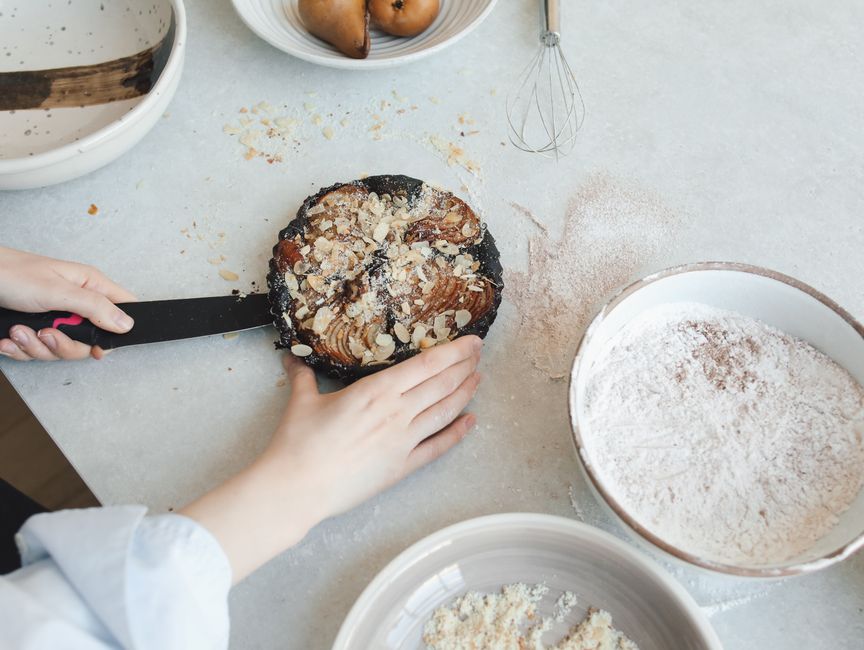
Pear and Almond Upside-Down Cake combines tender fruit, a buttery brown sugar topping, and a soft almond crumb. The pears bake underneath the batter, then become the decoration when you turn the cake onto a plate. You do not need to make a separate caramel or pipe any icing: a careful arrangement of pear slices does the finishing work. Serve it slightly warm for dessert, or let it cool completely for neat slices alongside tea.
Choose pears that hold their shape
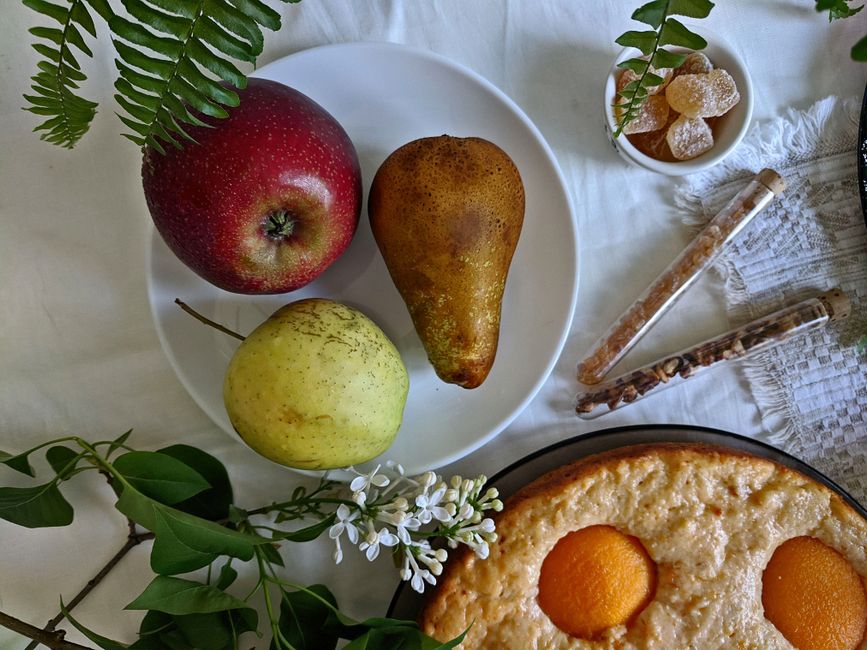
Choose pears that are ripe but still firm enough to slice cleanly. A pear should give slightly near the stem without feeling soft all over. Bosc or Conference pears are useful choices because their flesh can hold its shape during baking. Very juicy, overripe pears can release more liquid than the topping needs, leaving the surface wet and the crumb underneath heavy.
Peel the pears for a tender topping, then halve, core, and cut them lengthwise into slices about 5 mm thick. Keep the slices reasonably even so they soften together. You will need roughly 350 g of prepared fruit, usually from three medium pears. If your pears are particularly large, use only enough to cover the base in one slightly overlapping layer.
Ingredients and equipment
This recipe makes one 23 cm round cake, giving about eight servings. Use a solid-sided cake tin at least 5 cm deep. A loose-bottomed or springform tin can leak the melted butter and sugar. Have a serving plate with a rim ready for turning out the cake.
For the pear topping
- 45 g unsalted butter, melted, plus extra for greasing
- 75 g light brown soft sugar
- 3 medium firm-ripe pears, peeled, cored, and sliced
- 1 teaspoon lemon juice
- A small pinch of fine salt
For the almond cake
- 125 g unsalted butter, softened
- 125 g caster sugar
- 3 large eggs, at room temperature
- 1 teaspoon vanilla extract
- 100 g plain flour
- 100 g ground almonds
- 1 1/2 teaspoons baking powder
- 1/4 teaspoon fine salt
- 2 tablespoons milk, at room temperature
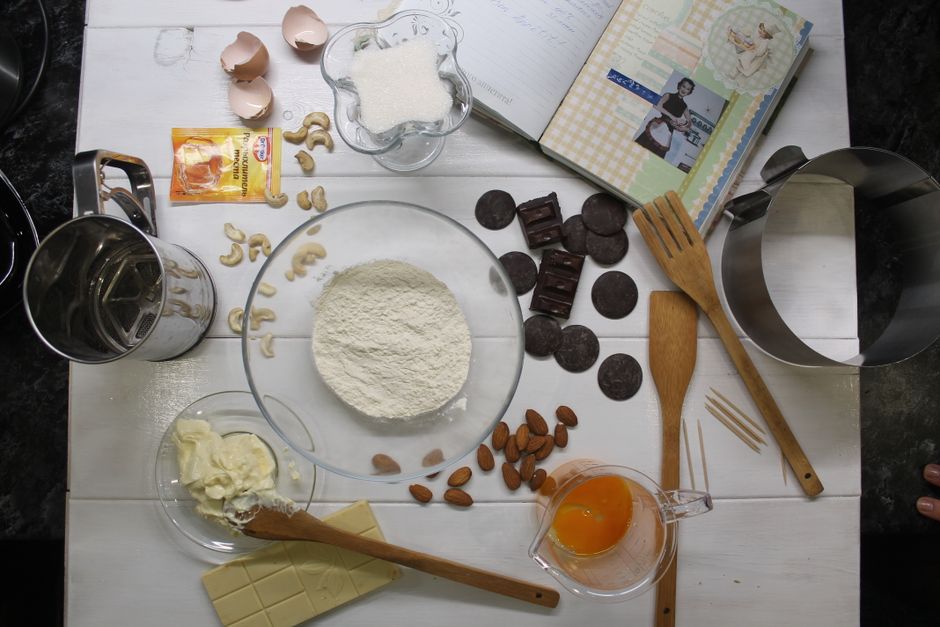
Ground almonds give the crumb a gentle nuttiness and tender texture, while plain flour provides enough structure to support the fruit. Use finely ground almonds rather than coarsely chopped nuts. Bring the butter, eggs, and milk to room temperature before mixing so the batter comes together more easily.
Build the pear layer
- Heat the oven to 180 degrees C conventional or 160 degrees C fan. Grease the tin, line the base with a circle of baking parchment, and lightly grease the parchment. Set the tin on a rimmed baking tray.
- Stir the melted butter, brown sugar, and pinch of salt together. Spread the mixture across the lined base. It may look grainy rather than smooth; the sugar will dissolve further as the pears release their juices.
- Toss the prepared pear slices gently with the lemon juice. Arrange them over the sugar mixture in a fan or overlapping circles, keeping them mostly in a single layer. Avoid stacking spare pieces in the middle, where they can slow the baking.
The first pieces you place in the tin will be the most visible after turning out. Point the narrow ends toward the center for a simple pattern, or lay the slices in curved rows. Leave the fruit resting on the topping while you mix the batter; there is no need to cook it separately.
Mix and bake the almond sponge
- Beat the softened butter and caster sugar in a large bowl until pale and fluffy, scraping down the sides as needed. This usually takes about three minutes with an electric hand mixer. The mixture should look lighter and feel soft rather than greasy.
- Add the eggs one at a time, beating after each addition. Stir in the vanilla. If the mixture begins to look curdled, beat in a spoonful of the measured flour before adding the next egg.
- In another bowl, combine the remaining flour, ground almonds, baking powder, and salt. Fold these into the butter mixture, then fold in the milk. Stop when no dry patches remain. The batter should be thick but easy to spread.
- Spoon small dollops of batter over the pears, distributing them around the tin before smoothing the top gently. This helps keep the fruit arrangement in place. Spread the batter all the way to the edges.
- Bake on the middle shelf for 40 to 50 minutes. Begin checking at 40 minutes: the top should be golden, the center should spring back lightly, and a skewer inserted into the sponge should come out without wet batter. Avoid pushing the skewer down into the fruit layer.
If the surface is browning before the center is cooked, cover it loosely with foil and continue baking. Use the doneness checks rather than the clock alone, since the moisture in the pears and the material of your tin can affect the timing.
Turn out while the topping is warm
Leave the baked cake in its tin for 10 to 15 minutes on a heatproof surface. This short rest helps the sponge settle while keeping the butter and sugar topping fluid enough to release. Turning it out immediately can break the hot cake; leaving it until completely cold can make the topping stick.
Run a thin knife around the edge. Place the serving plate upside down over the tin, then use oven gloves to hold both securely. Invert them together in one controlled movement, keeping your hands protected from hot syrup. Set the plate down, lift away the tin, and carefully peel off the parchment. If a pear slice stays behind, lift it with a spoon and return it to its place.
Serving, storing, and small adjustments
Allow the cake to cool for another 20 minutes before slicing so the crumb holds together. A spoonful of plain yogurt, lightly whipped cream, or vanilla ice cream works well with the warm fruit and nutty sponge. Cut with a sharp knife, wiping the blade between slices if the topping clings.
Once completely cool, cover and refrigerate any leftovers for up to three days. Bring individual slices toward room temperature before serving, or warm them briefly in the microwave in short bursts. The pear topping will soften during storage, so the cake is especially attractive on the day it is baked.
For a little variation, add half a teaspoon of ground cardamom to the dry ingredients or finely grated lemon zest to the batter. Keep the fruit quantity and batter proportions the same. The pears should remain the main flavor, with the almonds providing a gentle richness that makes each slice satisfying without needing an elaborate finish.