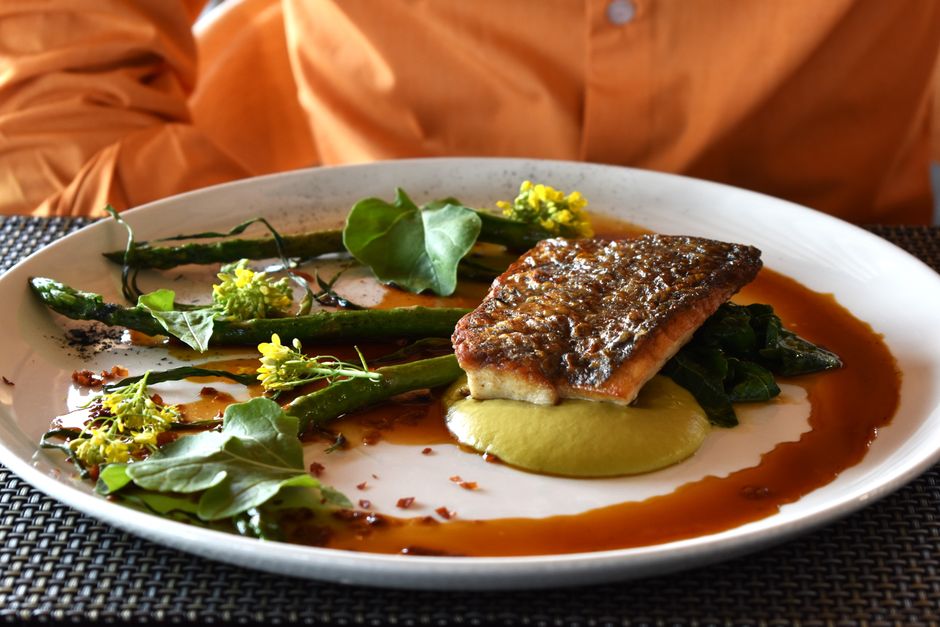
Pan-seared trout with asparagus and lemon butter brings together crisp fish skin, tender green spears, and a bright sauce made in the same pan. The ingredients are straightforward, but the order matters: cook the asparagus first, give the trout an undisturbed sear, then make the butter sauce once the pan has cooled slightly. That sequence keeps the vegetables from overcooking while you concentrate on the fish.
This recipe serves two and works especially well with thin, skin-on trout fillets. You will need a wide frying pan, a flexible fish slice or thin spatula, and a warm plate for holding the asparagus. Have your lemon squeezed and your butter cut before you start; the final sauce comes together quickly.
Ingredients for Two Servings
- 2 skin-on trout fillets, about 140-170 g each, scaled and pin bones removed
- 300 g asparagus
- 1 tablespoon neutral cooking oil, divided, plus a little extra if needed
- 40 g unsalted butter, cut into small cubes and kept cold
- 1 small lemon, finely zested, with 1 tablespoon juice reserved for the sauce
- 2 tablespoons water for the sauce, plus extra for cooking the asparagus
- 1 tablespoon finely chopped flat-leaf parsley
- Fine salt and freshly ground black pepper
- Lemon wedges, optional, for serving
A stainless steel or nonstick frying pan large enough to hold both fillets without overlap is useful here. If your pan is small, cook the fish in batches. Crowding traps moisture around the fillets and makes a crisp surface harder to achieve.
Prepare the Trout and Asparagus
Dry the fish thoroughly
Run your fingertips along the flesh to check for remaining pin bones, removing any you find with clean fish tweezers. Pat both sides dry with kitchen paper, paying particular attention to the skin. Moisture must evaporate before the skin can crisp, so this small preparation step makes a noticeable difference.
Keep the prepared fish refrigerated while you finish the vegetables and measure the sauce ingredients. Season the trout just before it goes into the pan. There is no need to coat it in flour; direct contact between dry skin and the hot pan is the aim.
Trim according to the spears
Cut away the dry, woody ends of the asparagus. For thicker spears, peel the lower third lightly with a vegetable peeler rather than discarding a long section of stalk. Leave slender asparagus whole, or halve very long spears crosswise so they fit comfortably in the pan.
Wash the asparagus and shake off excess water. A little remaining moisture is fine for the vegetable stage, because you will briefly steam the spears before letting the pan dry.
Cook the Asparagus First
- Heat half the oil in the frying pan over medium heat. Add the asparagus and a small pinch of salt, then turn the spears to coat them.
- Add 2 tablespoons of water and cover with a lid. Cook for about 2 minutes for slender spears or 3-4 minutes for thicker ones.
- Remove the lid and let any remaining water evaporate. Turn the asparagus for another minute or two, until bright green and just tender when pierced with a knife.
- Transfer to a warm plate. Leave uncovered so residual steam does not keep softening the spears. Wipe the pan dry carefully before cooking the trout.
The asparagus should still offer a little resistance at the centre. If you prefer softer vegetables, give them another splash of water and a short covered cook before drying the pan. Save the lemon for the sauce rather than adding it during this stage.
Pan-Sear the Trout
- Return the dry pan to medium-high heat and add the remaining oil. When the oil shimmers, season the trout lightly on both sides with salt and pepper.
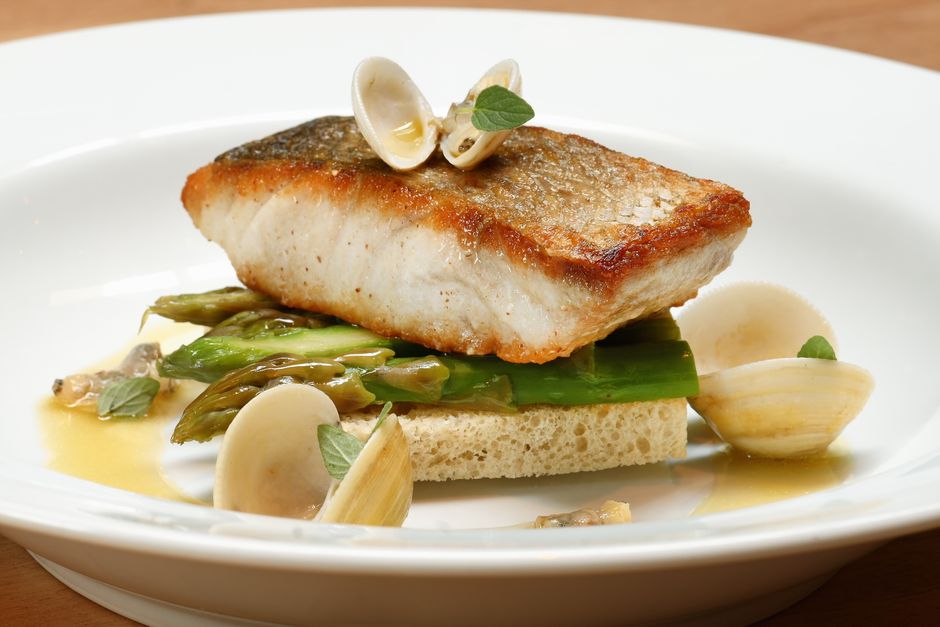
- Lay each fillet in the pan skin-side down, lowering it away from you. Press gently with the spatula for the first 15-20 seconds to help the skin stay flat.
- Reduce the heat to medium. Cook without moving the fish for about 3-5 minutes, depending on thickness. Look for golden skin and flesh that is turning opaque up the sides.
- Slide the spatula under each fillet and turn carefully. Cook the flesh side for about 1-2 minutes, adjusting for thickness, until the centre is opaque and separates into moist flakes.
- Transfer the trout to warm plates, skin-side up. Avoid covering it, which would soften the skin.
Use the timing as a guide rather than a fixed finish line. A thin tail section cooks faster than the thick end of a fillet. If necessary, position the thicker portions over the hotter part of the pan and check each fillet separately.
If the skin sticks, give it a little longer before trying again. Work the spatula underneath from an edge with gentle pressure. If you smell scorching or see smoke, lower the heat immediately; a stronger flame will not help the fish release cleanly.
Make the Lemon Butter Sauce
Take the pan off the heat and pour away excess oil, leaving any golden cooking residue behind. If there are blackened bits, wipe those out first so they do not make the sauce bitter. Let the pan cool briefly before adding the liquid.
- Add the reserved tablespoon of lemon juice and 2 tablespoons of water. Return the pan to low heat and stir, loosening the golden residue.
- When the liquid is hot, remove the pan from the heat. Whisk or swirl in the cold butter a few cubes at a time.
- Continue swirling until the sauce looks glossy. Stir in the parsley and a small pinch of lemon zest, then taste before adding salt or more lemon.
- If the sauce becomes too thick, stir in a teaspoon of warm water. Keep it warm gently without bringing it to a boil.
The water helps the butter form a light sauce that coats a spoon. Adding cold butter gradually, away from strong heat, gives you more control. If the sauce turns oily, take it off the heat and whisk in a teaspoon of cool water.
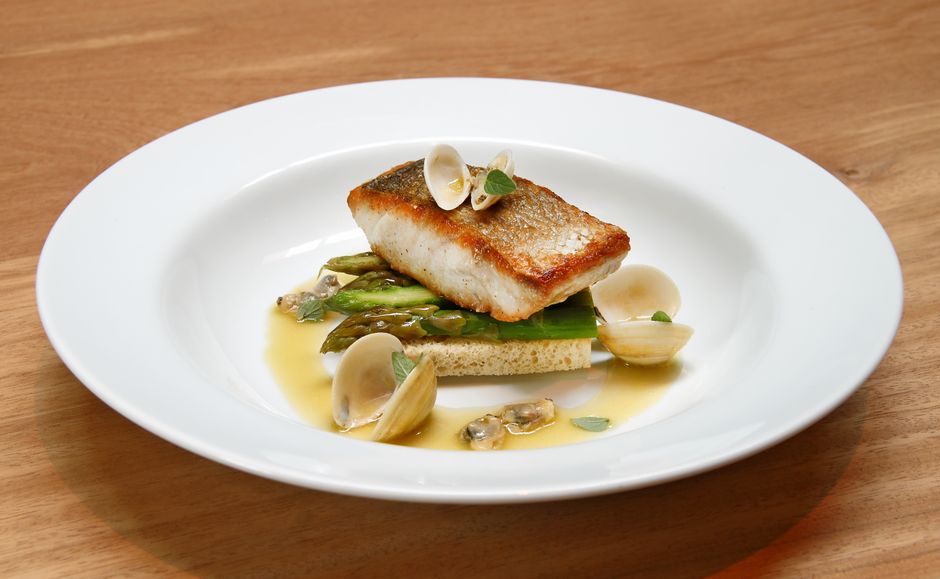
Plate and Serve Straight Away
Divide the asparagus between the plates beside the trout. Spoon the lemon butter over the asparagus and around the fish, leaving most of the crisp skin exposed. Finish with the remaining zest to taste and serve immediately.
Boiled baby potatoes, plain rice, or crusty bread make useful accompaniments for catching the sauce. Prepare them before searing the trout so the fish does not wait while you finish another component. If you want a herb variation, replace the parsley with a smaller quantity of chopped dill or chives.
For the best texture, cook only as much trout as you plan to serve. The asparagus can be trimmed in advance, and the lemon, parsley, and butter can all be measured and refrigerated separately. With that preparation done, the only work left is managing the pan and bringing everything to the table while the skin is crisp and the sauce is warm.