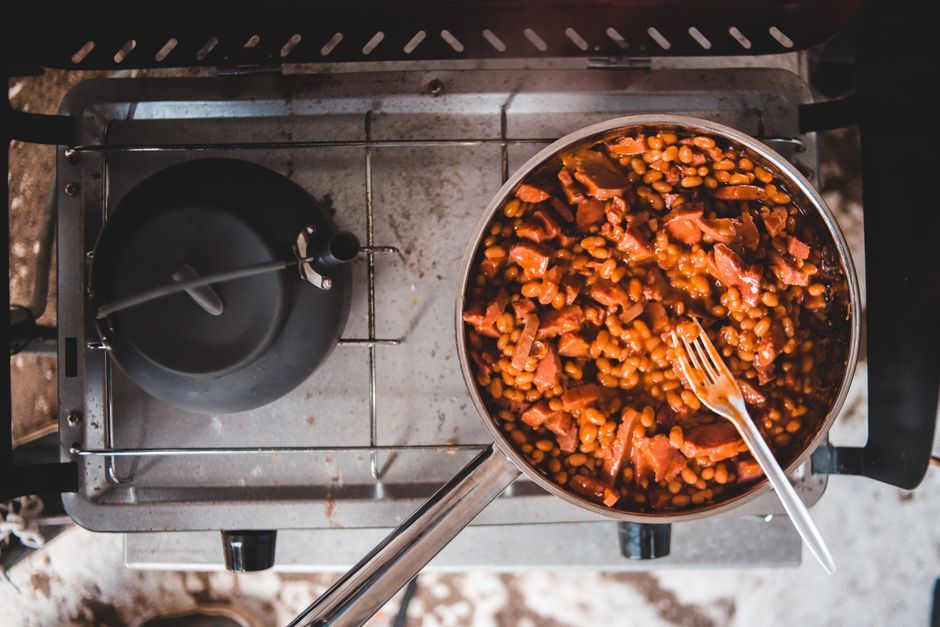
Sausage and White Bean Skillet with Kale is a practical supper built around browned sausage, creamy beans, and sturdy greens. Everything comes together in one wide pan, with enough savoury sauce to catch on a piece of bread. The beans thicken the cooking liquid as they simmer, so you get a satisfying texture without adding cream. A small splash of vinegar at the end balances the richness and brings the kale into focus.
Build flavour before adding liquid
The most important step happens before the beans enter the skillet. Give the sausage enough contact with the hot pan to develop browned edges. Those edges add depth, while the browned bits left underneath become part of the sauce when you pour in the stock. Keep the heat moderate if the sausage seasoning starts to catch.
This dish should finish with whole beans surrounded by a light, spoonable sauce. Crushing a few beans gives the liquid body without turning everything into a mash. Kale goes in towards the end so you can cook it until tender while keeping some texture. A deep skillet with a lid makes that final stage straightforward.
Ingredients for four servings
Allow about 15 minutes for preparation and 30 minutes for cooking. Use a deep skillet approximately 30 cm across, with a lid that fits reasonably well.
- 1 tablespoon olive oil, plus extra if needed
- 450 g raw pork sausages, casings removed
- 1 medium onion, finely chopped
- 3 garlic cloves, finely chopped
- 1 tablespoon tomato paste
- 1 teaspoon chopped fresh rosemary, or 1/2 teaspoon dried rosemary
- 2 tins cannellini beans, about 400 g each, drained and rinsed
- 300 ml low-salt chicken or vegetable stock, plus extra as needed
- 200 g kale, weighed after removing tough stalks, roughly chopped
- 1 to 2 teaspoons red wine vinegar
- Salt and freshly ground black pepper, to taste
- Grated Parmesan, optional, for serving
- Crusty bread, optional, for serving
Choose ingredients that work together
A plain pork sausage gives you room to taste the rosemary and garlic. An Italian-style sausage brings its own fennel or chilli seasoning, so choose according to the flavour you want. Hold back on salt until the sauce is finished because sausage, stock, and cheese can all contribute plenty.
Cannellini beans have a creamy centre and a useful size for this skillet. Haricot beans also work. If you have home-cooked beans, use about 480 g drained beans that are already completely tender. The short cooking time here warms them through and combines the flavours. Prepare the kale before starting so you can add it as soon as the beans are simmering.
Cook the sausage and bean skillet
- Brown the sausage. Heat the olive oil over medium-high heat. Add the sausage meat in bite-size pieces. Let the underside brown before turning, then break apart any very large pieces with a wooden spoon. Cook for about 7 to 9 minutes, until browned and cooked through. Transfer to a plate.
- Soften the onion. Reduce the heat to medium. Leave about 1 tablespoon of fat in the skillet, spooning away any excess. Add the onion and cook for 5 to 7 minutes, stirring occasionally, until soft. Add a little oil if the pan seems dry.
- Add the aromatics. Stir in the garlic, tomato paste, and rosemary. Cook for about 1 minute, stirring so the garlic does not burn. The paste should deepen slightly in colour and coat the onion.
- Loosen the browned bits. Pour in the stock and scrape the base of the skillet with the wooden spoon. Add the beans and bring to a gentle simmer. Crush a few spoonfuls of beans against the side of the pan, then stir them back through the liquid.
- Return the sausage. Add the sausage and any juices from the plate. Stir gently to distribute the pieces. The liquid should come partway up the beans. Add a splash more stock if the mixture looks dry.
- Cook the kale. Fold in the kale in two batches, allowing the first batch to wilt enough to make space. Cover and simmer gently for 4 to 6 minutes, or until the leaves are tender enough for your taste.
- Finish the sauce. Uncover and simmer for a few minutes if the liquid needs reducing. Stir in 1 teaspoon vinegar and taste a complete bite of sausage, beans, and greens. Add more vinegar, pepper, or salt as needed. Serve with Parmesan if using.
Once the beans are in the pan, avoid vigorous boiling or constant stirring. A gentle simmer keeps most of them intact while the crushed portion thickens the sauce. Turn the heat down if the liquid bubbles hard around the edges.
Adjust the skillet before serving
For a thicker sauce
Wait until the kale has softened before judging the liquid. Greens release moisture as they cook, especially if they were wet when added. Simmer uncovered to let excess liquid evaporate. If you still want more body, crush another spoonful of beans and fold it through. The sauce also thickens a little as the skillet stands.
For a looser finish
Add stock or water a tablespoon at a time and stir gently. You want a glossy coating around the beans with a little sauce underneath. If you are waiting to serve, keep extra liquid nearby because the beans continue to absorb it. Check the consistency again just before spooning into bowls.
For balanced seasoning
The vinegar should brighten the dish without making it sharply sour. Add it gradually, particularly when using strongly seasoned sausage. Taste before adding cheese, then remember that Parmesan supplies more salt. If you prefer some heat, choose a hot sausage at the start so its seasoning carries through the whole pan.
Bring it to the table
Serve in shallow bowls with bread for the juices. For a larger meal, spoon the skillet over soft polenta or alongside a baked potato. Keep any vegetable side simple, since the sausage and rosemary already provide plenty of flavour.
Divide the sausage pieces between the bowls, then spoon over beans, kale, and sauce. Offer grated cheese separately so everyone can finish their own portion. A final grind of black pepper gives the creamy beans a little extra bite, and the bread can take care of any sauce left behind.