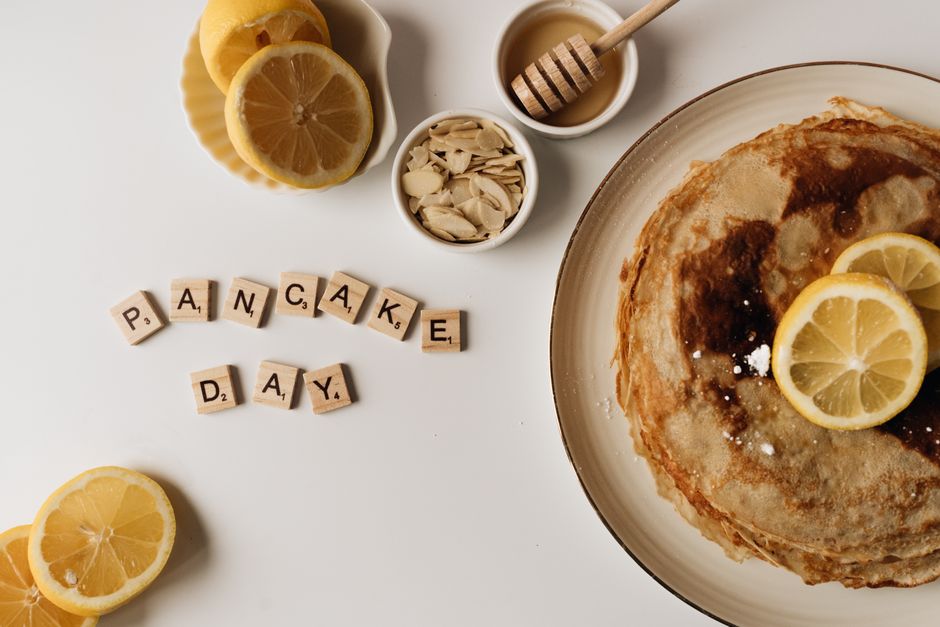
Lemon Poppy Seed Pancakes with Yogurt turn a simple breakfast into a bright, comforting stack. Finely grated zest supplies the lemon fragrance, poppy seeds add a gentle crunch, and plain yogurt gives the pancakes a tender middle. A spoonful of lemon yogurt on top keeps the flavors fresh, with just enough sweetness to bring everything together.
This recipe uses everyday ingredients and a frying pan. The important details are a lightly mixed batter, moderate heat, and a little patience before flipping. Keep the pancakes small so their centers cook through while the surfaces turn golden.
Ingredients and equipment
The recipe makes about 12 small pancakes, enough for four modest servings. Have two mixing bowls, a whisk, a flexible spatula, and a large nonstick frying pan ready. A fine grater helps you remove the fragrant yellow lemon peel without scraping into the bitter white pith.
For the pancakes
- 200 g all-purpose flour
- 2 tablespoons granulated sugar
- 1 tablespoon poppy seeds
- 2 teaspoons baking powder
- 1/4 teaspoon baking soda
- 1/4 teaspoon fine salt
- Finely grated zest of 1 large lemon
- 150 g plain unsweetened regular yogurt
- 150 ml milk, plus extra if needed
- 2 large eggs
- 2 tablespoons unsalted butter, melted and cooled slightly
- 1 tablespoon fresh lemon juice
- 1 teaspoon vanilla extract
- Neutral oil or extra butter for the pan
For the topping
- 150 g thick plain yogurt or Greek yogurt
- 1 to 2 teaspoons honey or maple syrup
- 1/2 teaspoon finely grated lemon zest
- 1 teaspoon lemon juice, optional
- Fresh berries, to serve
Zest your lemon before squeezing it, and reserve a little zest for the topping. Use fresh-smelling poppy seeds; seeds with a stale or bitter smell will affect the finished pancakes. There is no need to soak the seeds before adding them to this batter.
Mix the batter gently
- Release the lemon fragrance. Put the sugar and lemon zest in a large bowl. Rub them together with your fingertips until fragrant. Add the flour, poppy seeds, baking powder, baking soda, and salt. Whisk until evenly combined.
- Combine the wet ingredients. In a second bowl, whisk the yogurt, milk, and eggs until smooth. Add the melted butter, lemon juice, and vanilla. The butter should be warm or lukewarm, rather than hot.
- Fold everything together. Pour the wet ingredients into the flour mixture. Use a spatula to fold gently, scraping across the bottom of the bowl. Stop as soon as you cannot see dry pockets of flour. Small lumps are fine.
- Rest briefly. Leave the batter for about 5 minutes while you warm the pan. It should fall from a spoon in thick ribbons, then slowly settle. If it stands in a stiff mound, fold in extra milk one tablespoon at a time.
A smooth batter is not the goal here. Excessive mixing develops gluten, which can leave the pancakes chewy. The short rest also lets the flour absorb liquid, so judge the consistency after resting before making any final adjustment.
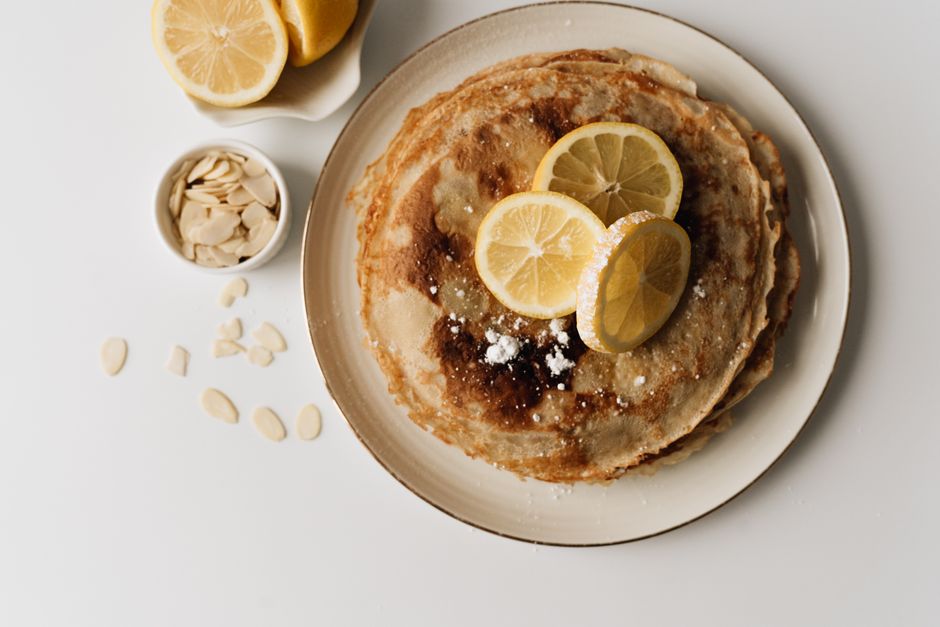
Cook small batches until golden
- Prepare the pan. Warm a nonstick frying pan over medium-low heat. Brush with a thin coating of neutral oil or butter. If the butter browns immediately, lower the heat before adding the batter.
- Portion the pancakes. Add about 3 tablespoons of batter for each pancake, leaving enough room to turn them comfortably. Let the batter spread naturally. If necessary, ease it outward gently with the back of your spoon.
- Wait for the edges to set. Cook for about 2 to 3 minutes. Look for edges that appear set and bubbles that open on the surface. Lift one edge with the spatula to check that the underside is golden.
- Turn and finish. Flip each pancake once, then cook for another 1 to 2 minutes. The middle should spring back lightly. Cut open the first pancake to check that there is no wet stripe of batter inside.
- Repeat carefully. Adjust the heat as needed and lightly grease the pan between batches. Wipe away dark butter residue before it burns. Avoid pressing the pancakes after turning, which compresses their soft centers.
The first pancake gives you useful information. If its surface darkens while the middle stays wet, lower the heat. If the batter barely spreads, add a small splash of milk to the bowl. Make one adjustment at a time so you can see its effect.
Stir the topping and serve
Mix the thick yogurt with the honey or maple syrup and reserved lemon zest. Taste before adding the optional lemon juice, because some yogurts already have plenty of tang. The topping should be lightly sweet and thick enough to sit on the pancakes.
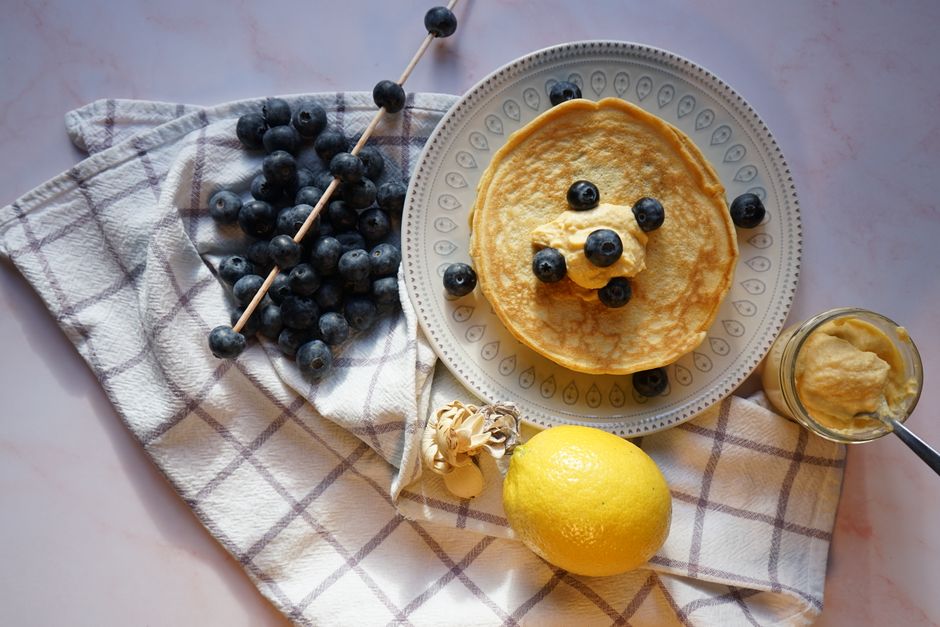
Serve two or three pancakes per plate with a spoonful of lemon yogurt and some berries. Blueberries, raspberries, and sliced strawberries all work well. Offer maple syrup separately so everyone can choose how sweet they want their breakfast.
To serve several people together, keep the cooked pancakes in a single layer on an ovenproof tray in a low oven, around 100 degrees Celsius. Hold them only while you finish the remaining batter. A tall covered stack traps steam and softens the surfaces.
Simple substitutions and adjustments
Using Greek yogurt
Greek yogurt can replace regular yogurt by weight, but it usually makes a thicker batter. Add extra milk gradually after the resting period until the mixture spreads slowly in the pan. Plain yogurt is easiest to balance; flavored varieties can introduce extra sweetness and competing flavors.
Getting more lemon flavor
For a stronger lemon aroma, add a little extra zest instead of more juice. Extra juice changes both the liquid balance and the acidity of the batter. If you prefer a sharper finish, adjust the yogurt topping with lemon juice, tasting as you go.
Adding berries to the pancakes
Scatter a few small blueberries over each pancake just after spooning the batter into the pan. Keep the amount modest so the pancakes remain easy to flip. Larger pieces of fruit are better served alongside, where their juices will not leave damp pockets in the crumb.
Store and reheat leftovers
Cool leftover pancakes on a wire rack, then refrigerate in a covered container for up to three days. Keep the yogurt topping in a separate container. For longer storage, freeze cooled pancakes with baking parchment between them, then pack in a freezer container for up to two months.
Warm the pancakes in a dry frying pan over gentle heat, turning as needed, or use a toaster if they fit safely. Frozen pancakes may need another gentle heating cycle. Add the yogurt and berries after reheating so you get warm lemon pancakes with a cool, fresh topping.