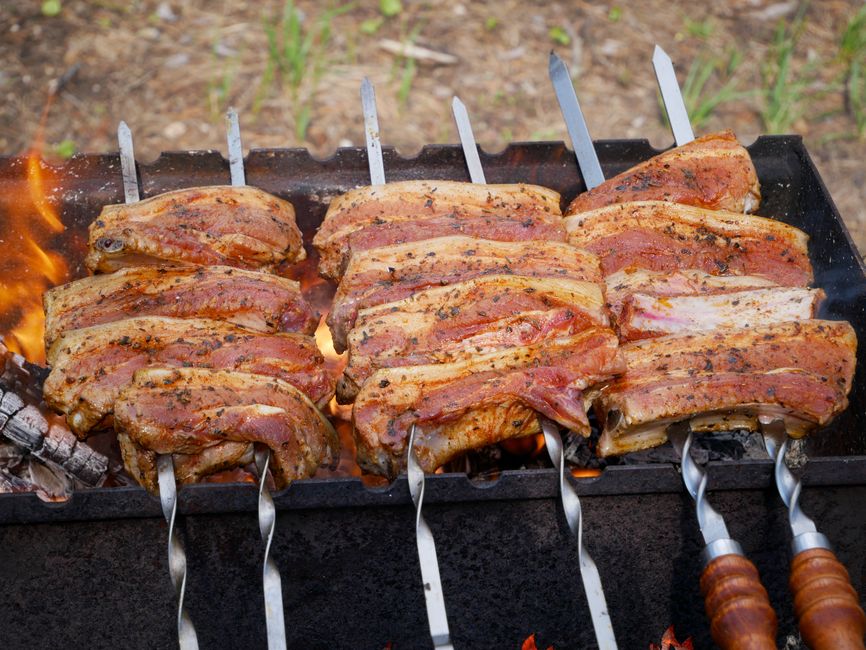
Grilled Pork Chops with Plum Salsa brings smoky, savory meat together with juicy fruit, sharp lime, and fresh herbs. The salsa works as a bright finishing sauce, so you can keep the pork seasoning simple and let the grill provide the deeper flavor. Choose thick chops, prepare the fruit while the grill heats, and use a thermometer to decide when the meat is ready. With attention to heat and timing, this makes a generous summer dinner without a complicated marinade or a sticky glaze.
The ingredients and equipment you need
This recipe serves four. Bone-in chops make an appealing presentation, but thick boneless loin chops also work. Aim for pieces of similar thickness so they cook at roughly the same pace. You will need a grill with a lid, tongs, a sharp knife, and an instant-read thermometer.
For the pork chops
- 4 bone-in pork loin chops, each about 1 inch thick
- 1 tablespoon olive oil
- 1 teaspoon fine sea salt, reduced if the chops are already salted or enhanced with a salt solution
- 1 teaspoon smoked paprika
- 1/2 teaspoon ground cumin
- 1/2 teaspoon freshly ground black pepper
- 1/2 teaspoon garlic powder
For the plum salsa
- 4 medium ripe but firm plums, about 1 pound total
- 1/4 cup finely diced red onion
- 1 small jalapeño, finely chopped, with seeds and pale ribs removed for less heat
- 1/4 cup chopped fresh cilantro
- 1 tablespoon fresh lime juice, plus more to taste
- 1 teaspoon olive oil
- 1/4 teaspoon fine sea salt, plus more to taste
- 1 teaspoon honey, optional, for particularly tart plums
Keep a clean platter ready for the cooked chops. A second plate or tray should hold the raw meat, and the salsa should stay in its own bowl, away from raw pork and its utensils.
Choose plums that hold their shape
The best plums for this salsa yield slightly when pressed but still feel firm enough to dice. Very soft fruit can collapse into a sauce, while hard, underripe fruit may taste sharply sour. Red, purple, or yellow plums all work; taste a small piece before adding the lime so you know how much acidity the bowl needs.
Leave the skins on for color and texture. Cut each plum into wedges around the stone, then dice the flesh into pieces about 1/2 inch across. If the stone clings tightly, slice the flesh away in sections instead of trying to twist the halves apart. Keep the onion and chili pieces smaller than the fruit so they spread evenly through each spoonful.
If your onion tastes particularly strong, rinse the diced pieces briefly under cold water and drain well. This softens their bite without removing the crunch. Dry them before mixing so the salsa does not become watery.
Prepare the chops and set up the grill
Pat the pork dry with paper towels. Mix the salt, paprika, cumin, pepper, and garlic powder in a small bowl. Rub the chops lightly with olive oil, then season both sides and the edges. You can do this just before cooking, or season several hours ahead and refrigerate the chops, covered, until you are ready to heat the grill.
Set up two cooking zones: one over direct medium-high heat for browning, and another with gentler, indirect heat for finishing. On a gas grill, leave one burner low or off. On a charcoal grill, bank the coals to one side. Preheat with the lid closed, then clean the grate and lightly oil it using an appropriate grill-safe method.
Two zones give you somewhere to move the pork if the outside browns before the middle is cooked. They also help you manage flare-ups from dripping fat. Avoid pressing the chops with your tongs, which squeezes out juices without helping them cook evenly.
Mix the salsa and grill the pork
- Combine the salsa. Put the diced plums, onion, jalapeño, cilantro, lime juice, olive oil, and salt in a bowl. Fold gently, then taste. Add the optional honey only if the fruit needs it. Refrigerate while you cook the pork.
- Start over direct heat. Lay the chops on the hot zone with a little space between them. Close the lid and cook for about 3 to 4 minutes, until the underside has browned and releases readily from the grate.
- Turn and brown the second side. Flip with tongs and cook for another 3 to 4 minutes. If flames rise around a chop, move it to the cooler zone until they settle.
- Check the center. Insert the thermometer from the side into the thickest part, keeping the tip away from bone. If the pork has not reached 145°F (63°C), move it to indirect heat, close the lid, and continue cooking, checking frequently.
- Rest before serving. Once each chop reaches 145°F (63°C), transfer it to the clean platter and let it rest for at least 3 minutes. Different chops may finish at different times.
- Finish with salsa. Stir the salsa, taste once more, and spoon it over the rested pork. Serve extra salsa alongside so everyone gets plenty of fruit with the meat.
The cooking times are a starting point. Thickness, starting temperature, bone size, and grill heat all affect the finish, so the thermometer matters more than a fixed number of minutes. Check each chop individually, especially if their sizes vary.
Adjust the flavor and build the meal
For a milder salsa, leave out the jalapeño or replace it with finely diced sweet pepper. If cilantro is not your preference, use flat-leaf parsley with a little chopped mint. Add mint sparingly at first; its flavor can quickly take over the plums.
If the salsa tastes flat, try a small pinch of salt before adding more lime. If it is already sharp, add a few extra pieces of ripe plum. Let the fruit guide the balance rather than automatically using extra sweetener. A slotted spoon is useful when especially juicy plums release more liquid than you want on the plate.
Serve the chops with plain rice, grilled potatoes, or warm flatbread to catch the juices. A simple green salad adds freshness, while grilled green beans or sliced summer squash can cook alongside the pork. Keep side dishes lightly seasoned so the smoky spices and plum salsa remain the focus.
Make ahead and use the leftovers
You can chop the onion and chili in advance and mix the pork seasoning ahead of time. For the freshest texture, dice the plums and add the herbs closer to serving. Keep prepared salsa refrigerated, and give it a gentle stir before bringing it to the table.
Refrigerate leftover pork and salsa in separate covered containers within two hours of serving, or within one hour in temperatures above 90°F (32°C). Use the cooked pork within three to four days. The salsa is best eaten the next day, while the fruit still has some firmness.
To reheat, place the pork in a covered skillet with a splash of water and warm gently until it reaches 165°F (74°C). Spoon cold salsa over it after reheating. Alternatively, slice chilled leftover pork thinly for a sandwich with lettuce and a little salsa, adding the fruit just before eating to keep the bread from becoming soggy.