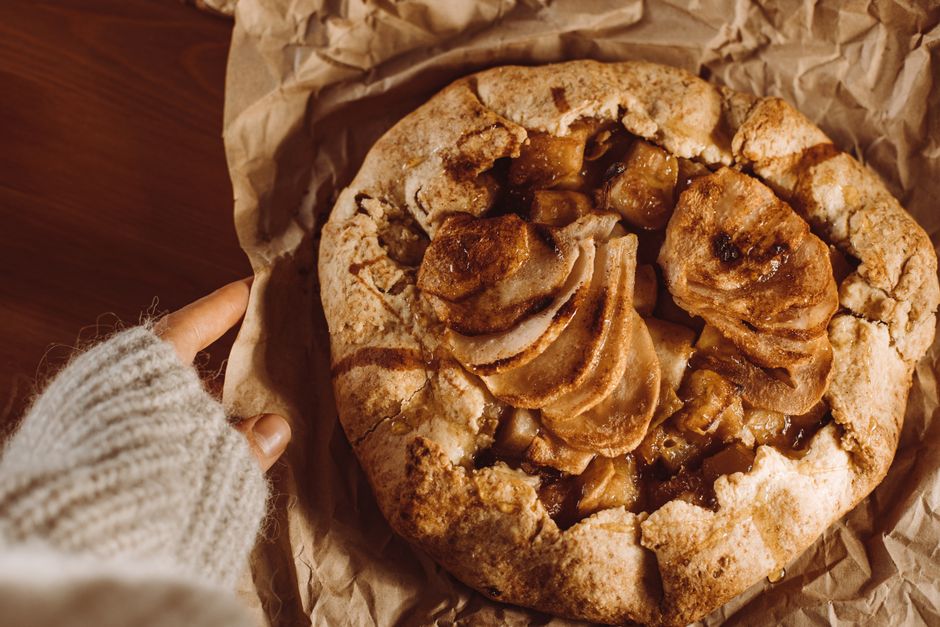
A blackberry and apple galette combines tender apple slices, sharp berries and a buttery pastry crust in a dessert you can bake on a flat tray. The pastry folds around the filling, leaving the purple-stained fruit visible in the middle. There is no tart tin to line, and an uneven edge suits the finished bake. The important details are underneath that relaxed appearance: cold dough, thinly sliced apples and enough thickener to keep the berry juices from soaking the base.
Blackberry and Apple Galette ingredients
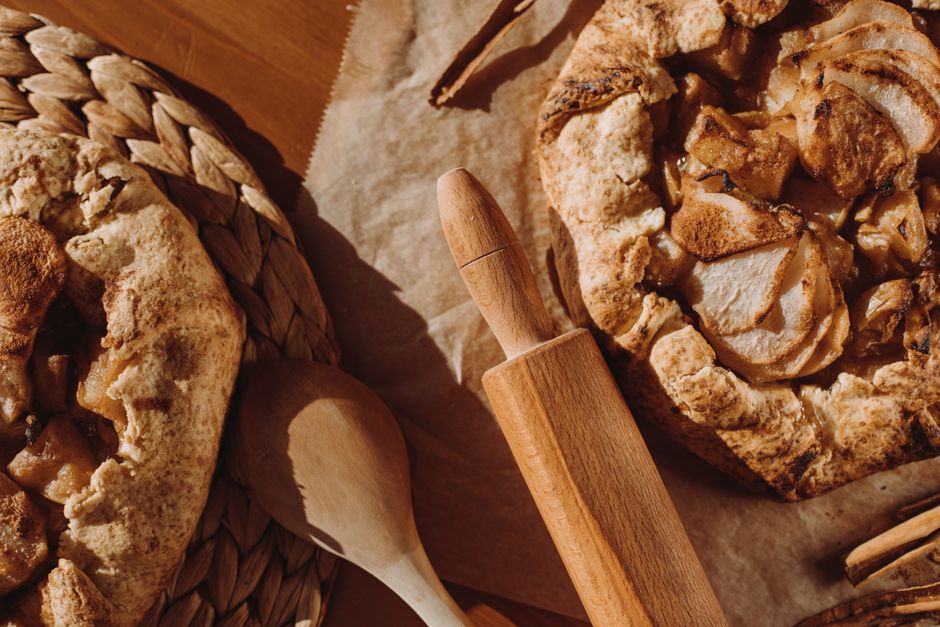
This recipe makes one galette serving six. Allow about 30 minutes for preparation, at least one hour for chilling the dough, 40–50 minutes for baking and another 30 minutes for cooling. You will need a large baking tray, baking parchment, a rolling pin and a pastry brush.
For the pastry
- 200g plain flour, plus extra for rolling
- 1 tablespoon caster sugar
- ¼ teaspoon fine salt
- 115g cold unsalted butter, cubed
- 3–5 tablespoons ice-cold water, added gradually
For the filling and finish
- 300g firm eating apples, weighed before peeling and coring
- 200g fresh blackberries
- 60g caster sugar
- 1 tablespoon cornflour
- Finely grated zest of ½ lemon
- 1 teaspoon lemon juice
- ¼ teaspoon ground cinnamon
- 2 teaspoons fine semolina
- 1 egg, beaten, for brushing
- 1 tablespoon demerara sugar, for sprinkling
The cinnamon adds gentle warmth without covering the blackberries. Lemon zest gives fragrance with very little extra liquid. Semolina forms a thin absorbent layer beneath the filling; it is useful here because the open shape allows fruit juice to collect directly against the pastry.
Choose and prepare the fruit
Firm eating apples such as Braeburn or Pink Lady work well because they soften while retaining some shape. Peel and core them, then cut them into slices about 3mm thick. Thick chunks may remain hard after the crust is baked, while thin slices cook evenly alongside the berries.
Choose ripe blackberries that still hold together when handled. Remove any damaged or mouldy fruit. If the berries need rinsing, do so briefly and dry them carefully on a clean towel. Wet berries add unnecessary water to a filling that will already release juice in the oven.
Taste the fruit before adding sugar. The listed amount suits moderately tart berries and sweet-sharp apples. For particularly sour blackberries, add another tablespoon of caster sugar. If both fruits are very sweet, reduce the sugar by a tablespoon. Keep the cornflour quantity the same, since its job is to thicken the juice.
Make the pastry and give it time to chill
- Combine the flour, caster sugar and salt in a mixing bowl. Add the cold butter and rub it into the flour with your fingertips until the mixture resembles coarse crumbs, with a few small flattened pieces of butter remaining.
- Add 3 tablespoons of ice-cold water and stir with a table knife. Squeeze a little mixture between your fingers. If it crumbles apart, add more water a teaspoon at a time until the dough holds together when pressed.
- Tip the mixture onto the work surface and press it into a disc. Avoid kneading it smooth. Wrap the dough and refrigerate for at least one hour.
The dough should feel cohesive but not sticky. A few visible pieces of butter are helpful for a flaky crust, so stop rubbing before everything becomes uniformly fine. If the butter turns soft or greasy, put the bowl in the fridge briefly before continuing.
Chilling firms the butter and gives the dough time to relax. When you are ready to roll, let a very firm disc stand at room temperature for a few minutes. It should bend under the rolling pin without breaking into deep cracks.
Fill and fold the galette
- Heat the oven to 200°C conventional or 180°C fan. Line a large flat baking tray with baking parchment.
- Roll the dough on a lightly floured surface into a rough circle about 30cm across and 3mm thick. Transfer it to the lined tray. Press small scraps of dough over any cracks in the centre to seal them.
- Mix the caster sugar, cornflour, lemon zest and cinnamon in a bowl. Add the prepared apple slices and lemon juice, then toss well. Fold in the blackberries gently so they remain mostly whole.
- Scatter the semolina over the pastry, leaving a border about 5cm wide. Arrange the fruit in an even layer over the semolina. If liquid has collected in the bowl, lift out the fruit with a slotted spoon and leave the loose liquid behind.
- Fold the border over the outer fruit, overlapping the pastry as you move around the circle. Press each pleat lightly to help it hold. Leave the centre open.
- Brush the exposed pastry with beaten egg and sprinkle with demerara sugar. If the pastry has softened during assembly, refrigerate the tray for 15 minutes before baking.
Mix the filling only when the rolled pastry is ready. Sugar draws moisture from fruit, so a long wait creates more loose juice. Spread the apples and berries fairly evenly rather than piling everything high in the middle. Keep the filling below the folded rim to help contain it.
Bake until the centre bubbles
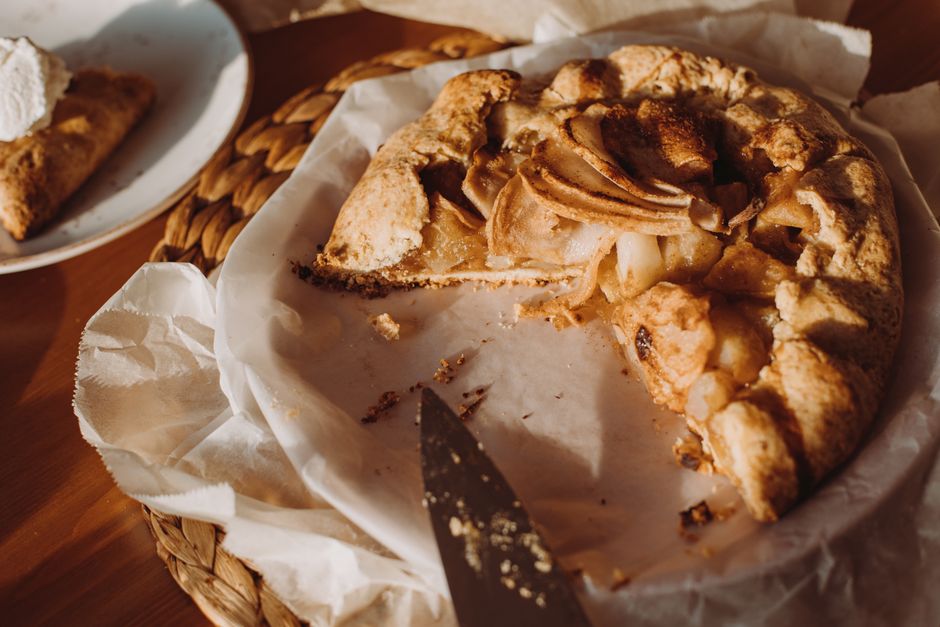
Place the tray on a rack in the lower third of the oven and bake for 40–50 minutes. The crust should be deeply golden, and the fruit juices should bubble in the centre as well as around the edges. Bubbling shows that heat has reached the filling and helps the cornflour thicken the released liquid.
Check an exposed apple slice with the tip of a knife. It should be tender, with little resistance. If the pastry is already brown but the apples need longer, loosely shield the browned edges with foil and continue baking. A little juice leaking onto the parchment is normal; leave the galette in place while it finishes cooking.
Cool on the tray for at least 30 minutes before cutting. The filling settles as it cools, and the pastry becomes easier to lift. Moving it straight from the oven can split the base and spill the hot fruit.
Serving and saving leftovers
Serve warm or at room temperature with thick cream, plain yogurt or vanilla ice cream. Use a sharp knife to cut wedges and a flat server to support the base. For especially tidy portions, cool the galette completely before slicing, then warm individual pieces.
You can prepare the pastry up to two days ahead and keep it wrapped in the fridge. Slice and mix the fruit close to assembly. Refrigerate leftover galette in a covered container for up to three days. Reheat portions on a baking tray at 170°C conventional or 150°C fan until warmed through. This helps the pastry regain some crispness, though the fruit beneath it will remain soft and juicy.