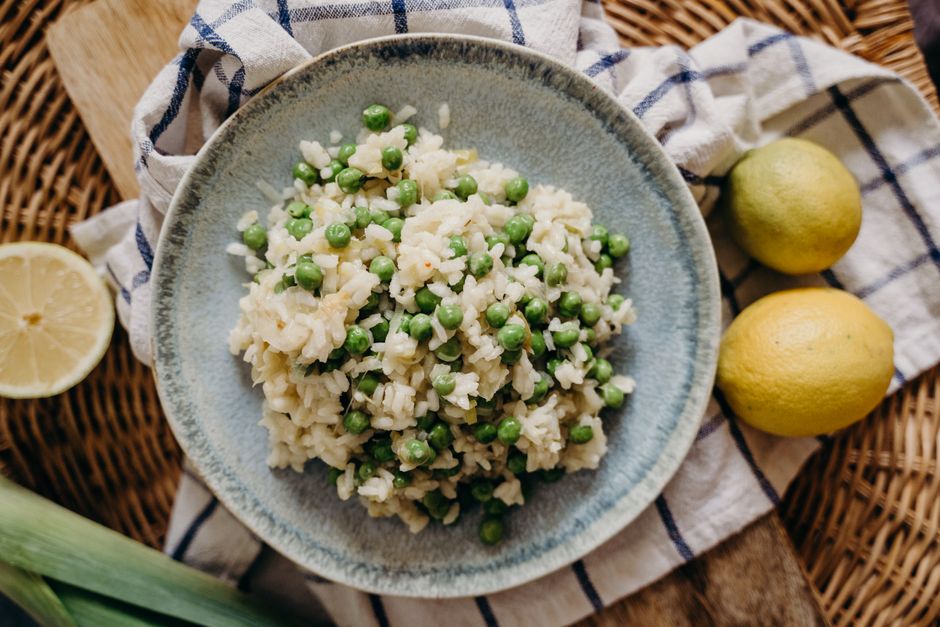
Spring vegetable risotto with peas and asparagus brings sweet green vegetables, tender rice, and a little lemon together in a bowl that feels generous without being heavy. The rice supplies the creamy texture, so you do not need cream. What matters most is adding the vegetables at the right moment and keeping enough warm stock nearby to loosen the finished risotto. This recipe walks you through those decisions, with a straightforward stovetop method and clear cues for when everything is ready.
What makes this a spring risotto
Peas and asparagus need much less cooking than the rice. Adding them at the beginning would soften them too far and mute their fresh flavor. Instead, cook the asparagus briefly in a separate pan, then fold it into the rice with the peas near the end. This gives you more control over both vegetables, especially when asparagus spears vary in thickness.
A small amount of lemon zest lifts the finished dish without making it sharply acidic. Parsley adds a gentle herbal finish, while Parmesan contributes savory depth. Keep the seasoning restrained until the cheese goes in, since both the stock and cheese affect how much salt you need.
Ingredients for four servings
Allow about 15 minutes for preparation and roughly 30 minutes at the stove. Serve this as a main course in shallow bowls, with everything ready before you start cooking the rice.
- 300 g arborio or carnaroli rice
- 350 g asparagus
- 200 g frozen peas, or shelled fresh peas
- 1.2 liters vegetable stock, plus a little extra hot water if needed
- 2 tablespoons olive oil, divided
- 1 small onion, finely chopped
- 1 garlic clove, finely chopped
- 100 ml dry white wine, or an equal amount of additional stock
- 30 g unsalted butter, cut into small pieces
- 60 g finely grated Parmesan, plus extra for serving
- Finely grated zest of half a lemon
- 1 tablespoon lemon juice, added gradually to taste
- 2 tablespoons chopped flat-leaf parsley
- Salt and freshly ground black pepper
Choose the rice and stock thoughtfully
Use risotto rice rather than long-grain rice. Arborio and carnaroli release starch as they cook, helping the liquid become creamy while the grains retain some definition. Do not rinse the rice: you want the surface starch to stay in the pan. Choose a vegetable stock with a mild flavor so it supports the asparagus rather than overwhelming it.
Prepare the asparagus
Trim away the woody ends. If the lower stalks feel tough, peel that portion lightly before cutting. Slice the stems into pieces about 2 cm long and keep the tips separate. Thick stems will need longer in the pan than slender tips, so separating them makes it easier to cook both evenly.
How to make the risotto
- Warm the stock. Pour the stock into a saucepan and bring it to a gentle simmer. Turn the heat low enough to keep it hot without boiling vigorously. Set a ladle beside the saucepan so you can add stock easily while stirring the rice.
- Cook the asparagus. Heat 1 tablespoon olive oil in a skillet over medium heat. Add the asparagus stems with a pinch of salt and 2 tablespoons water. Cook for about 2 minutes, then add the tips and cook for another 1–3 minutes. The pieces should be bright green and just tender when pierced. Transfer to a plate.
- Soften the onion. In a wide, heavy saucepan, heat the remaining tablespoon of olive oil over medium-low heat. Add the onion and cook for 5–7 minutes, stirring occasionally, until soft and translucent. Add the garlic and stir for about 30 seconds. Avoid browning either ingredient.
- Coat the rice. Add the dry rice and stir for about 2 minutes, coating the grains in the onion mixture. Pour in the wine, if using, and stir until most of the liquid has evaporated. If replacing the wine with stock, add that now instead.
- Add stock gradually. Pour in a ladleful of hot stock and maintain a gentle, steady simmer. Stir frequently, sweeping across the bottom of the pan. When the liquid has mostly absorbed but the rice still looks moist, add another ladleful. Continue this rhythm, adjusting the heat if the liquid disappears too quickly.
- Check the rice and add the vegetables. Begin tasting the rice after about 15 minutes of adding stock. When it is nearly tender but still has a firmer center than you want, stir in the peas. Continue cooking and adding stock as needed. Fold in the cooked asparagus for the final 2 minutes so it heats through.
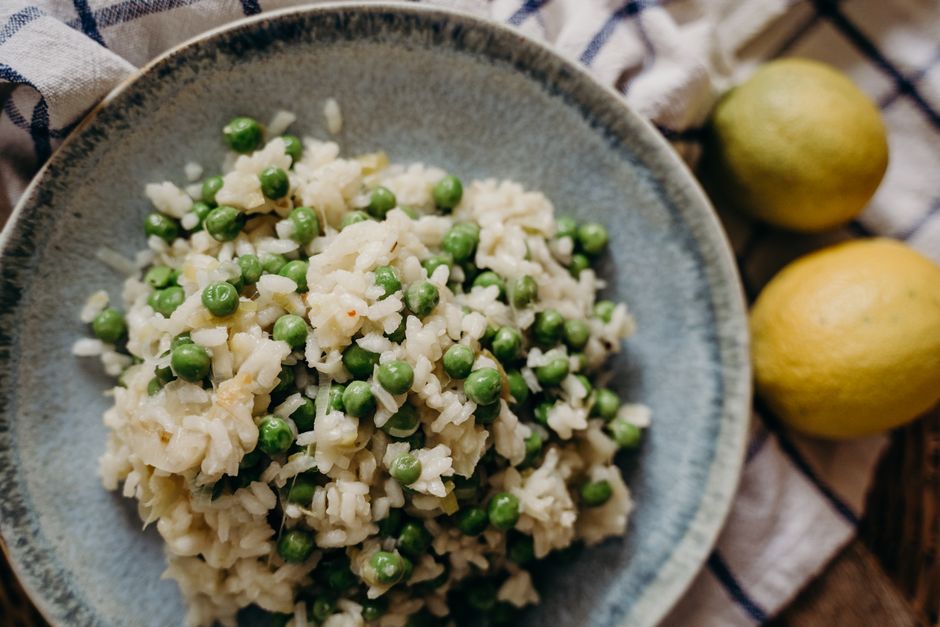
- Finish off the heat. Once the rice is tender with a slight bite, remove the pan from the heat. Stir in the butter, Parmesan, lemon zest, and parsley. Add lemon juice a little at a time, tasting as you go. Adjust the salt and pepper, then stir in enough hot stock or water to make the risotto flow gently.
- Serve promptly. Let the pan stand for about a minute, then check the consistency again. Spoon into warm, shallow bowls and offer extra cheese at the table. The risotto should spread slightly when you gently tilt the bowl.
Frozen peas can go straight into the rice. Fresh peas vary in tenderness; taste one first and give larger, starchier peas a little more cooking time. In either case, check that they are tender before taking the pan off the heat.
Read the texture instead of watching only the clock
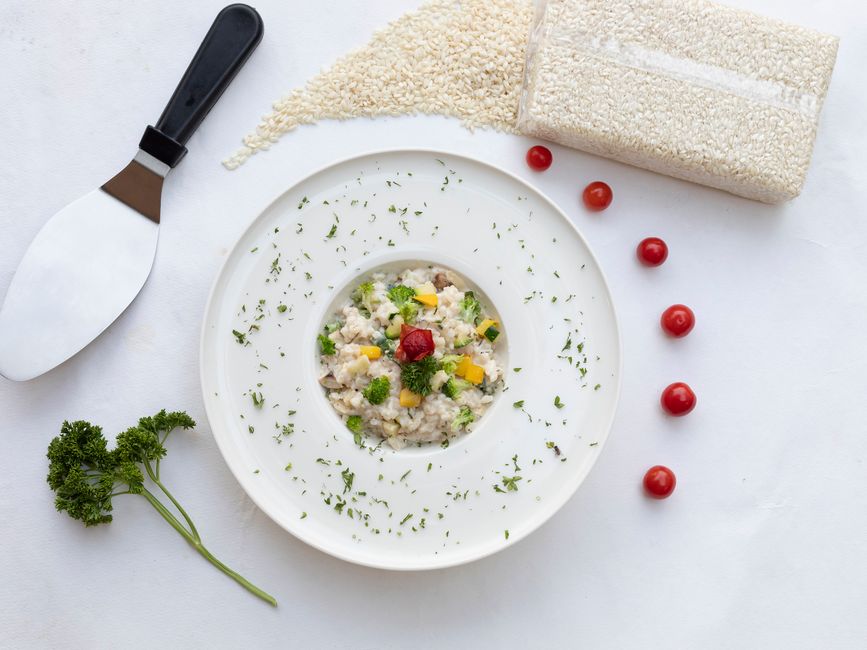
The amount of stock you use depends on your pan, heat, and rice. You may have some left over, or you may need extra hot water. Keep adding liquid according to how the rice feels rather than trying to empty the stock saucepan. A cooked grain should be tender around a small, pleasantly firm center, with no hard or chalky crunch.
The finished risotto should be loose and spoonable. If it sits in a stiff mound, add another splash of hot liquid. If a watery pool separates from the grains before finishing, simmer briefly while stirring. Remember that the cheese and the short rest will thicken the dish further.
Simple adjustments and serving ideas
For an alcohol-free version, use the additional stock listed in the ingredients and rely on the lemon at the end for brightness. For a vegetarian dish, choose a hard cheese labeled as suitable for vegetarians in place of Parmesan. If you prefer a milder herbal note, reduce the parsley; avoid adding several strong herbs that could hide the vegetables.
Serve alongside a small green salad dressed lightly with lemon and olive oil. If you are cooking for guests, chop the onion, grate the cheese, and prepare the asparagus beforehand, but cook the rice close to serving. Risotto thickens as it waits, so having bowls and accompaniments ready makes the final few minutes much easier.