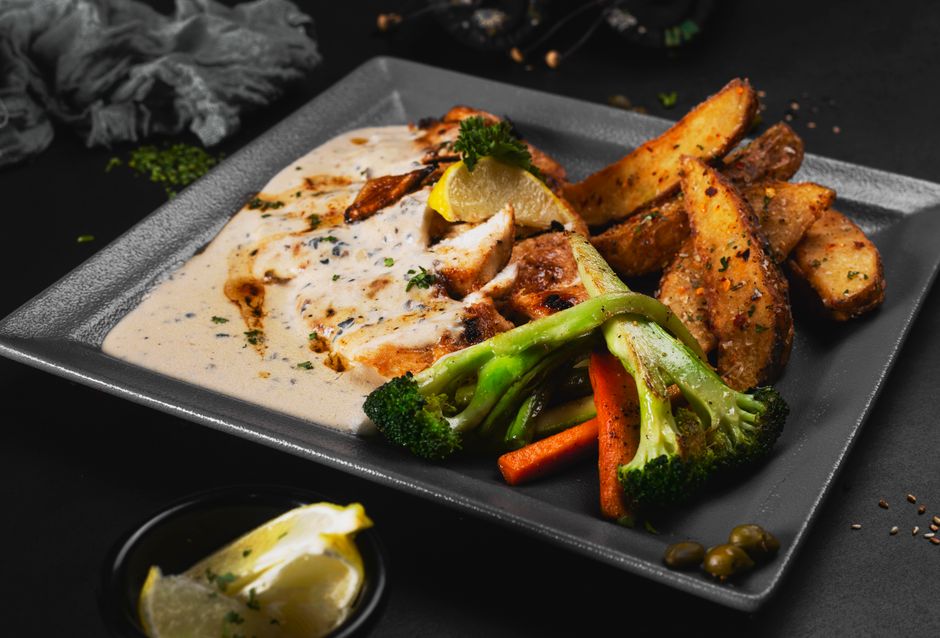
Roasted purple sprouting broccoli with lemon and garlic turns a bundle of slender stems into a side dish with tender centres, crisp leaves and lightly browned florets. The lemon brightens the broccoli’s earthy flavour, while garlic adds warmth without needing a heavy sauce. You can serve it beside a simple main course or build a light meal around it with beans, eggs or bread.
The detail that makes this recipe work is timing. Give the stems enough space and heat to soften, add the garlic towards the end, then finish with lemon juice once the tray leaves the oven. That order helps you get browned broccoli, fragrant garlic and a fresh citrus finish.
What to expect from purple sprouting broccoli
Purple sprouting broccoli has smaller florets and longer, more slender stems than the familiar large-headed variety. Its leaves are edible too, so keep any that look fresh and sound. In the oven, those leaves can become pleasantly crisp while the thicker stems retain a little bite.
The purple colour often fades or turns green during cooking. Judge doneness by texture and browning rather than by whether the florets stay purple. A cooked stem should yield to the tip of a knife, and the floret edges should have a little colour without becoming black and bitter.
Bundles vary considerably in thickness. If yours includes pencil-thin shoots alongside chunky stalks, a few minutes of preparation will help everything cook together. Split the thickest stems lengthways, leaving their florets attached where possible.
Ingredients and equipment
This recipe serves four as a side dish. Allow about 10 minutes for preparation and 15–20 minutes for roasting, with the final timing guided by the thickness of your broccoli.
- 500 g purple sprouting broccoli
- 2 tablespoons olive oil, divided
- 2 medium garlic cloves, finely chopped
- 1 unwaxed lemon, finely zested, with juice added to taste
- ¼ teaspoon fine salt, plus more to taste
- Freshly ground black pepper
- A small pinch of dried chilli flakes, optional
You will also need a large, shallow baking tray, a small bowl and a sharp knife. Use two trays if the broccoli cannot sit in a loose single layer. A crowded tray traps moisture around the stems, making it harder for the edges to brown.
Choose and prepare the broccoli
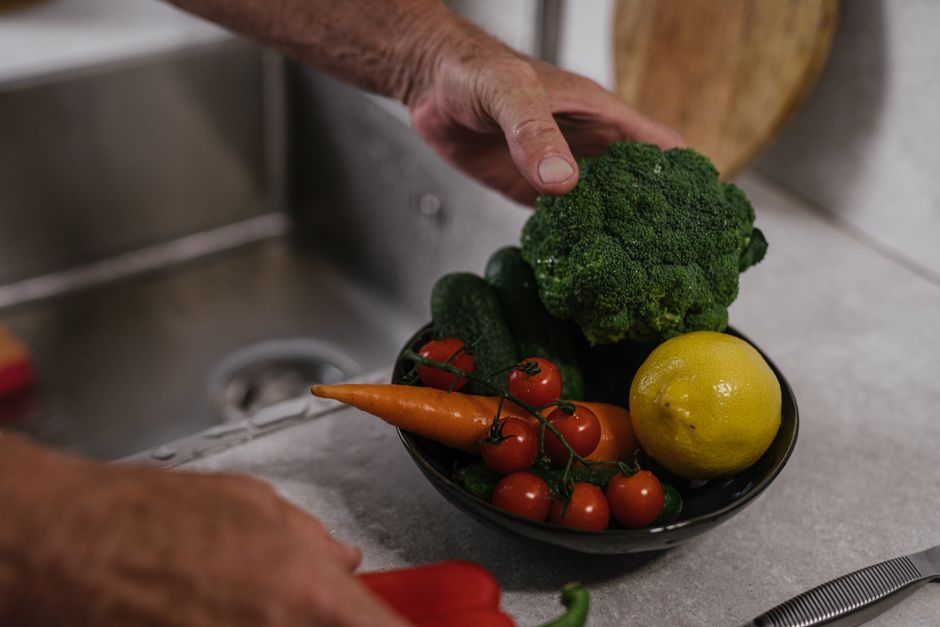
Look for firm stems, compact florets and leaves that feel lively rather than limp. Trim away dry stem ends and discard any yellowed or damaged leaves. Rinse the broccoli, checking between the florets, then dry it thoroughly with a clean tea towel. Water caught in the florets encourages steaming and can make hot oil spit.
If a cut stem feels woody, trim a little further up or peel its tough outer layer. Keep the usable stems long for an attractive platter, or cut particularly large pieces into manageable lengths.
How to roast it with lemon and garlic
- Heat the oven. Set it to 220°C conventional or 200°C fan. Position a rack around the middle so the broccoli has room beneath the top heating element.
- Season the broccoli. Put the prepared, dry broccoli on the tray. Add 1½ tablespoons of the olive oil, the salt and a few grinds of pepper. Toss well, rubbing a little oil over the florets and leaves, then spread the pieces out.
- Start roasting. Roast for 10 minutes. Meanwhile, combine the chopped garlic with the remaining ½ tablespoon of olive oil in a small bowl. Keep the lemon zest separate for the finish.
- Turn and add the garlic. Turn the broccoli with tongs. Spoon over the garlic oil, distributing it across the stems and florets. Add the chilli flakes now if using. Return the tray to the oven for another 5–8 minutes.
- Check the stems. Pierce one of the thickest stems with a knife. If it is still hard, roast for a little longer, checking frequently. Remove any thin shoots that are already tender and browned.
- Finish off the heat. Scatter over the lemon zest and squeeze on about 1 tablespoon of lemon juice. Toss gently, taste and add more juice or salt if needed. Transfer to a serving dish, scraping over the golden garlic and tray juices.
Serve promptly while the leaves and floret edges still have their crispness. Put the remaining lemon on the table in wedges so everyone can adjust the acidity to their liking.
Small adjustments that improve the result
Protect the garlic from scorching
Finely chopped garlic cooks much faster than broccoli stems. Adding it partway through roasting gives it time to soften and become fragrant. Spread it over the vegetables instead of leaving little heaps on the bare tray, where it can darken quickly. If it looks ready before the stems are tender, lower the oven slightly and check often.
Balance the lemon at the end
Zest brings lemon aroma without much sourness, while juice supplies acidity. Using both lets you build flavour gradually. Start with the measured spoonful of juice, then taste a stem as well as a floret before adding more. A very juicy lemon can easily overwhelm a small tray of vegetables.
Work with uneven stems
If some stems are much thicker than the rest, splitting them is usually enough. You can also arrange the thicker pieces towards the hotter edges of the tray and keep delicate leafy shoots nearer the centre. Turn the tray when you add the garlic if your oven browns unevenly.
Ways to serve it
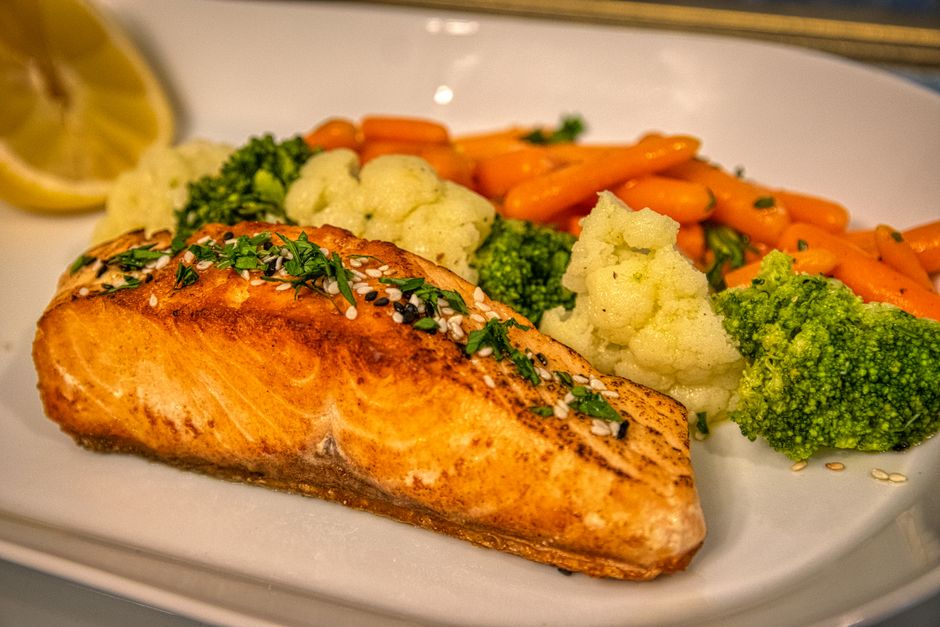
For a straightforward dinner, serve the broccoli alongside baked fish, roast chicken or a plain omelette. Its lemony dressing also suits boiled potatoes or a spoonful of white beans. Keep accompanying sauces fairly restrained so the browned florets and garlic remain noticeable.
To make a light lunch, spoon warm butter beans onto plates, lay the broccoli over them and add a little extra olive oil. Alternatively, serve it over thick toast with a soft egg. These additions make use of the recipe’s existing flavours without requiring a separate dressing.
A small handful of toasted flaked almonds adds crunch, while a little finely grated hard cheese brings a savoury finish. Choose either according to the meal, and taste before adding extra salt. The broccoli is also satisfying served simply, straight from the tray.
Storing and reheating leftovers
Let leftovers cool, then refrigerate them in a covered container within two hours. Use within three days. The leaves will soften in storage, but the broccoli can still be chopped into an omelette or folded through warm grains with a splash of olive oil.
To reheat, spread it on a tray and warm in a 180°C oven until hot throughout, checking before the delicate florets become too dark. Add a fresh squeeze of lemon after warming. If preparing ahead for guests, wash, trim and dry the raw broccoli in advance, then roast close to serving time for the best texture.


