Chilled tomato gazpacho with cucumber turns ripe summer produce into a refreshing soup with very little preparation. Tomatoes supply the body, cucumber brings a clean, cooling flavor, and olive oil softens the sharpness of vinegar and garlic. The texture should feel substantial enough to eat with a spoon while still being light. This recipe uses a small amount of bread to bring everything together, with simple adjustments for the tomatoes you have. Allow time for chilling, then finish each bowl with a handful of crisp chopped vegetables.
Choose tomatoes that carry the soup
Because the vegetables stay raw, their flavor matters throughout the bowl. Choose ripe tomatoes that feel heavy and smell fragrant around the stem. A mixture of large slicing tomatoes and smaller sweet tomatoes works well. Cut away tough cores and any damaged spots before weighing the prepared fruit.
You can leave the tomato skins on for blending. If your blender struggles with skins, pass the finished soup through a fine sieve. This gives a smoother result but removes some body, so wait until after straining to decide whether you need any water.
English cucumber is convenient because its skin is thin and its seeds are usually tender. With a thick-skinned garden cucumber, peel it and scoop out any large, hard seeds. Taste a small piece before adding it. A bitter cucumber can overwhelm the sweetness of the tomatoes.
Ingredients for four servings
This makes four modest lunch portions or six small starters. Preparation takes about 20 minutes, followed by at least two hours in the refrigerator. Have a blender, a large bowl, and a covered storage container ready.
- 900 g ripe tomatoes, weighed after coring and roughly chopped
- 250 g cucumber, trimmed, peeled if needed, and roughly chopped
- 1 small red bell pepper, about 120 g after removing the stem and seeds
- 30 g mild red onion, roughly chopped
- 1 small garlic clove, peeled
- 50 g day-old white bread, weighed without a very hard crust and torn into pieces
- 3 tablespoons extra virgin olive oil, plus a little for serving
- 1 tablespoon sherry vinegar, plus more to taste
- 1/2 teaspoon fine salt, plus more to taste
- Freshly ground black pepper, to taste
- 2-6 tablespoons cold water, only as needed
For the chopped topping
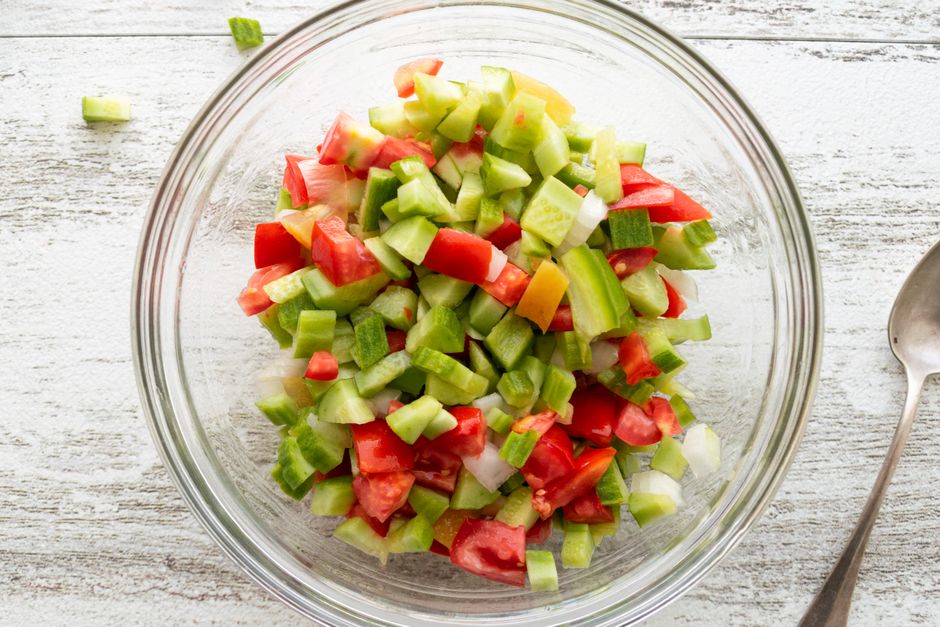
- 1/3 cup finely diced cucumber
- 1/3 cup finely diced tomato
- 2 tablespoons finely diced red bell pepper
- A few small basil or flat-leaf parsley leaves, optional
Use plain bread with a fairly soft crumb. Strongly flavored seeded loaves can compete with the vegetables, while a very tough crust may leave flecks in the soup. If the bread is completely dry, let it soften thoroughly in the tomato juices before blending.
Blend, chill, and season
- Soften the bread. Put the chopped tomatoes in a large bowl with the bread, vinegar, and salt. Stir well, pressing the bread into the juices. Leave for 10 minutes while you prepare the other vegetables.
- Prepare the aromatics. Cut the garlic clove in half and remove any prominent green shoot. Add the garlic, cucumber, pepper, and onion to the tomato mixture. Keep the topping vegetables separate.
- Blend until smooth. Transfer the mixture to your blender, working in batches if necessary. Start slowly, then increase the speed until the vegetables and bread are thoroughly broken down. Avoid overfilling the jug.
- Add the olive oil. With the blender running at a speed that allows safe pouring through its designated opening, add the oil gradually. If your blender has no suitable opening, stop it, add the oil, replace the lid, and blend again. The soup should become slightly creamier.
- Check the consistency. Stir the batches together if you blended them separately. Add cold water one tablespoon at a time only if the soup is too thick to pour easily. Add a little black pepper.
- Chill thoroughly. Transfer to a covered container and refrigerate for at least two hours. Stir before tasting, then adjust the salt and vinegar in small additions. Spoon into bowls and add the chopped topping, herbs if using, and a small drizzle of olive oil.
The soup may look coral or orange-red after blending, especially once the oil is incorporated. Its color depends on the tomatoes and pepper. Judge the finished bowl by its flavor and texture.
Balance the flavor after chilling
Cold soup can need a final seasoning adjustment. Taste a spoonful once the gazpacho has chilled, then consider what it needs. If the tomato flavor seems muted, stir in a small pinch of salt and taste again before adding anything else.
If the soup tastes heavy or overly sweet, a few drops of vinegar can sharpen it. If it is already quite tart, blend in another small piece of softened bread or a little more olive oil. These additions soften the overall impression, though very acidic tomatoes will still give a tangy soup.
Raw garlic and onion should support the vegetables. Start with the listed amounts, particularly if you plan to refrigerate the soup overnight. For a stronger garlic flavor, blend in a small extra piece after chilling, then give the soup another brief rest before serving.

Keep the texture easy to eat
If the soup is too thick
Stir in cold water gradually, checking after each tablespoon. Tomato juice released from an extra chopped ripe tomato is another option. Avoid adding a large quantity at once, since a diluted soup will need its seasoning adjusted again.
If the soup is too thin
Blend in a little more bread that has softened in a ladleful of soup. Start with a small piece, then chill briefly before checking the texture. The bread absorbs liquid as it rests. Reserve extra cucumber for the topping, since blending in more cucumber adds water.
If the soup separates
A little separation during storage is easy to handle. Stir vigorously or blend briefly before serving. Adding the oil gradually during preparation helps it disperse through the vegetable mixture, while the bread gives the soup a more cohesive texture.
Serve and store your gazpacho
Serve in chilled bowls for a spoonable starter, or use small glasses for a light first course. Keep the diced topping small so each mouthful contains both smooth soup and a little crunch. Toasted bread alongside makes it a more substantial lunch.
For a bread-free version, omit the bread and begin without added water. Expect a lighter texture, and blend thoroughly to disperse the oil. If you need the recipe to be gluten-free, use suitable gluten-free bread and check the remaining ingredient labels.
Refrigerate the gazpacho promptly in a covered container and use within two days. Store the chopped topping separately to preserve its texture. Pour out only what you plan to serve and return the remaining soup to the refrigerator. A final stir and a fresh topping are all it needs before it reaches the table.