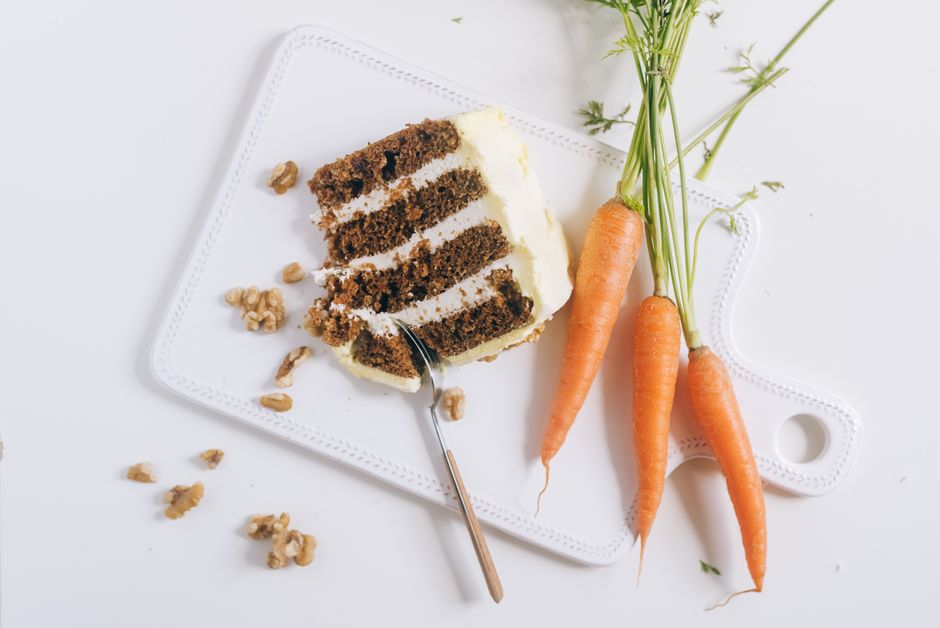
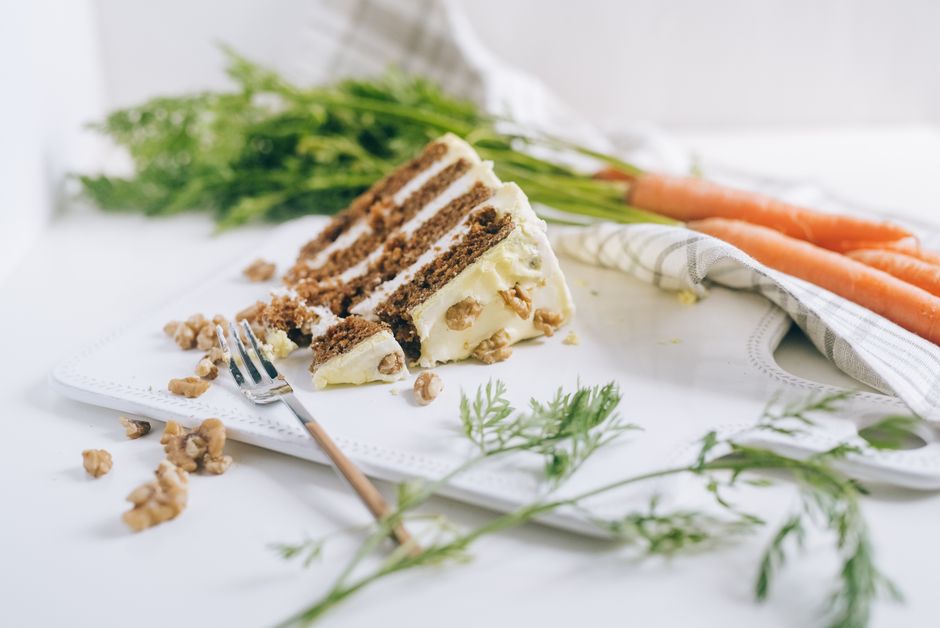
Carrot Cake with Orange Cream Cheese Icing combines a tender, warmly spiced crumb with a bright citrus topping. Freshly grated carrots bring moisture, while orange zest gives the icing plenty of flavour without adding much liquid. This recipe makes one rectangular cake, so there are no layers to stack or edges to trim. Spread the icing over the cooled cake, cut it into squares and serve it for dessert or with an afternoon cup of tea.
A simple cake with a balanced topping
Neutral oil keeps the crumb soft, and a mixture of brown and white sugar adds sweetness with a gentle caramel note. Cinnamon and ginger support the carrots without overwhelming them. The cream cheese icing supplies a tangy finish, with most of its orange flavour coming from finely grated zest.
You will need a deep 23 x 33 cm baking tin, baking paper, two mixing bowls and a box grater. A handheld mixer makes preparing the icing easier, but you can mix the cake batter with a whisk and spoon. Cut the finished cake into about 15 squares, or make smaller portions for a larger gathering.
Ingredients
For the carrot cake
- 300 g plain flour
- 2 teaspoons baking powder
- 1 teaspoon bicarbonate of soda
- 2 teaspoons ground cinnamon
- 1 teaspoon ground ginger
- 1/4 teaspoon ground nutmeg
- 1/2 teaspoon fine salt
- 200 g soft light brown sugar
- 100 g caster sugar
- 4 large eggs, at room temperature
- 200 ml neutral oil, such as sunflower or rapeseed oil
- 100 g plain natural yogurt, at room temperature
- 2 teaspoons vanilla extract
- 350 g carrots, weighed after trimming and peeling, then grated
- 75 g walnuts or pecans, roughly chopped, optional
For the orange cream cheese icing
- 100 g unsalted butter, softened but still cool
- 200 g cold full-fat cream cheese, preferably a firm block variety
- 300 g icing sugar, sifted
- Finely grated zest of 1 large orange
- 1 teaspoon vanilla extract
- A small pinch of fine salt
- 1-2 teaspoons fresh orange juice, only if needed
- A little extra orange zest for finishing, optional
Grate the orange before cutting it for juice, taking only the coloured outer skin. Leave the bitter white pith behind. If you use cream cheese from a tub, choose a thick, full-fat variety and pour away any visible liquid before weighing it.
Prepare the carrots and baking tin
Heat the oven to 180 degrees Celsius conventional or 160 degrees Celsius fan. Lightly grease the tin and line its base and sides with baking paper. Leave an overhang on the long sides so you can lift the cake out once it has cooled slightly. Press the paper into the corners to help the batter spread evenly.
Grate the carrots using the medium holes of a box grater. Thick shreds can remain noticeable in the baked cake, while blending the carrots into a puree changes the batter. Freshly grated carrots work better here than ready-shredded carrots, which can be dry and coarse. Do not squeeze out their moisture.
Chop the optional nuts into small pieces so the cake cuts neatly. You can leave them out without replacing them. Before mixing, check that the eggs and yogurt have lost their refrigerator chill, which helps them combine smoothly with the oil.
Mix and bake the carrot cake
- Combine the dry ingredients. Whisk together the flour, baking powder, bicarbonate of soda, cinnamon, ginger, nutmeg and salt in a large bowl. Break up any clumps of spice.
- Mix the wet ingredients. In another bowl, whisk both sugars with the eggs until combined. Add the oil, yogurt and vanilla, then whisk until smooth. Press any stubborn brown sugar lumps against the bowl with a spoon.
- Fold together. Pour the wet mixture into the dry ingredients. Fold gently until only a few flour streaks remain, then add the grated carrots and optional nuts. Scrape across the bottom of the bowl and stop mixing once no dry pockets remain.
- Fill the tin. Transfer the batter to the prepared tin, spread it into the corners and lightly smooth the top.
- Bake until set. Bake on the middle shelf for 35-45 minutes, checking from 35 minutes. The centre should spring back lightly, and a skewer inserted into it should come out without wet batter. A few moist crumbs are fine.
- Cool thoroughly. Leave the cake in the tin for about 20 minutes. Lift it carefully onto a wire rack using the paper and allow it to cool completely before icing.
Keep the folding gentle once you add the flour. There is no need to beat air into this batter, and prolonged mixing can make the crumb less tender. If the surface colours before the middle is cooked, loosely cover the cake with foil for the remaining baking time.
Make the orange cream cheese icing
Beat the butter until smooth. Add the sifted icing sugar in several additions, mixing slowly at first so it stays in the bowl. Mix in the orange zest, vanilla and salt, scraping down the sides as needed. The mixture will be thick before you add the cream cheese.
Add the cold cream cheese and mix briefly on a low speed, just until smooth. Prolonged beating can warm and loosen the icing. Check its consistency before adding orange juice: the zest already supplies the citrus flavour. If the icing is too stiff to spread, add juice a teaspoon at a time.
If the icing feels soft, refrigerate it for 20-30 minutes before spreading. Place the completely cooled cake on a board or serving plate. Spoon the icing over the top and spread it into shallow swirls. Add a little fresh orange zest just before serving if you want a simple finish.
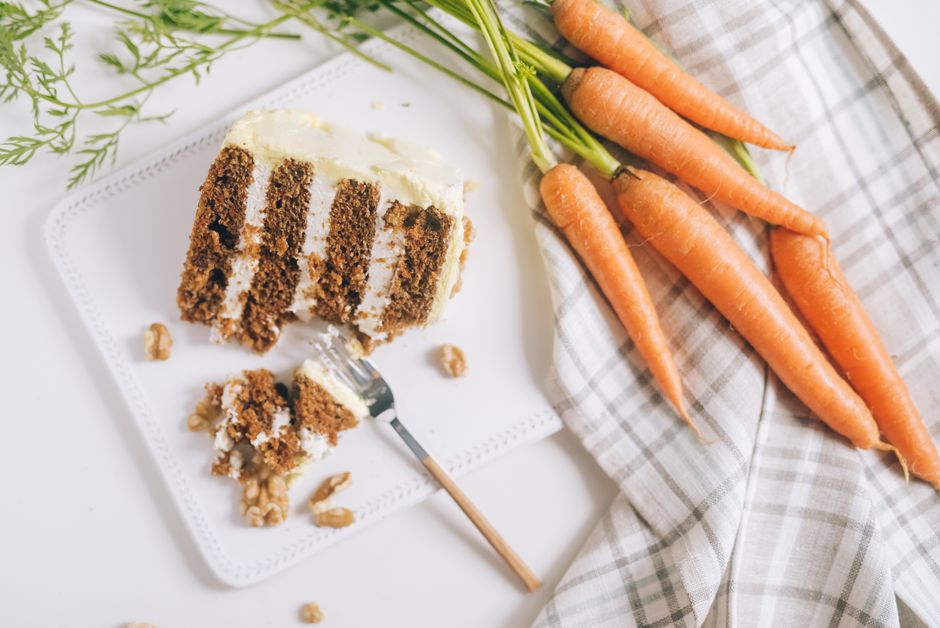
Slice, store and prepare ahead
For neat squares, chill the iced cake until the topping feels firm, then cut with a sharp knife. Wipe the blade between cuts to keep the edges clean. Let individual portions stand briefly at room temperature before serving so the crumb and icing soften slightly.
Store the iced cake covered in the refrigerator and use within three days. A deep container protects the topping better than wrapping pressed against its surface. Return leftovers to the refrigerator promptly after serving, especially in a warm kitchen.
To prepare ahead, bake the cake the day before serving. Let it cool completely, wrap it well and refrigerate overnight, then add the icing the following day. You can also freeze the uniced cake, tightly wrapped, for up to two months. Thaw it in its wrapping in the refrigerator, then unwrap and check that the surface is dry before icing.
For an alternative finish, scatter a few chopped walnuts around the edges. Keep the decoration light so each slice delivers the soft carrot crumb, gentle spice and bright orange cream cheese icing.