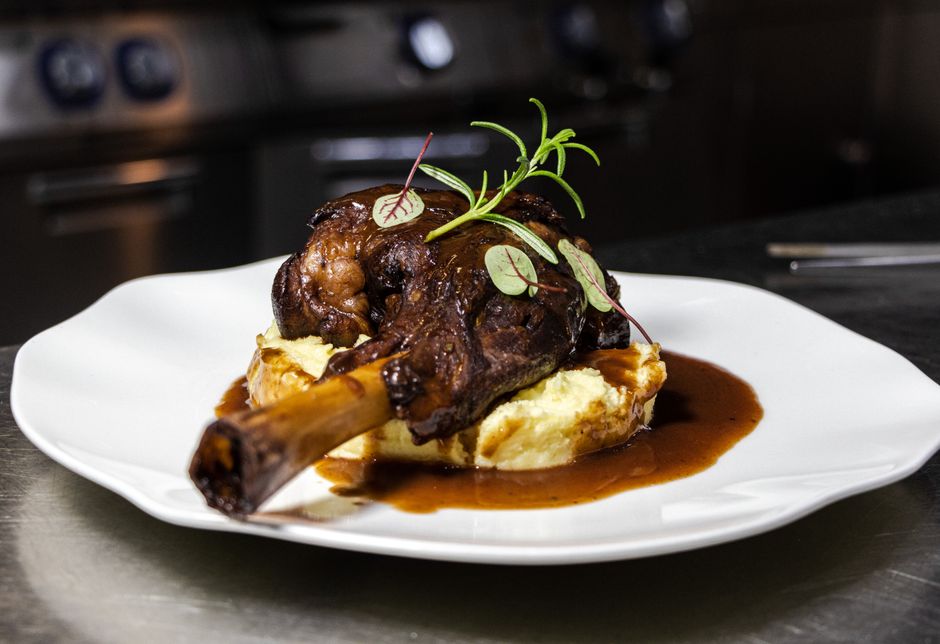
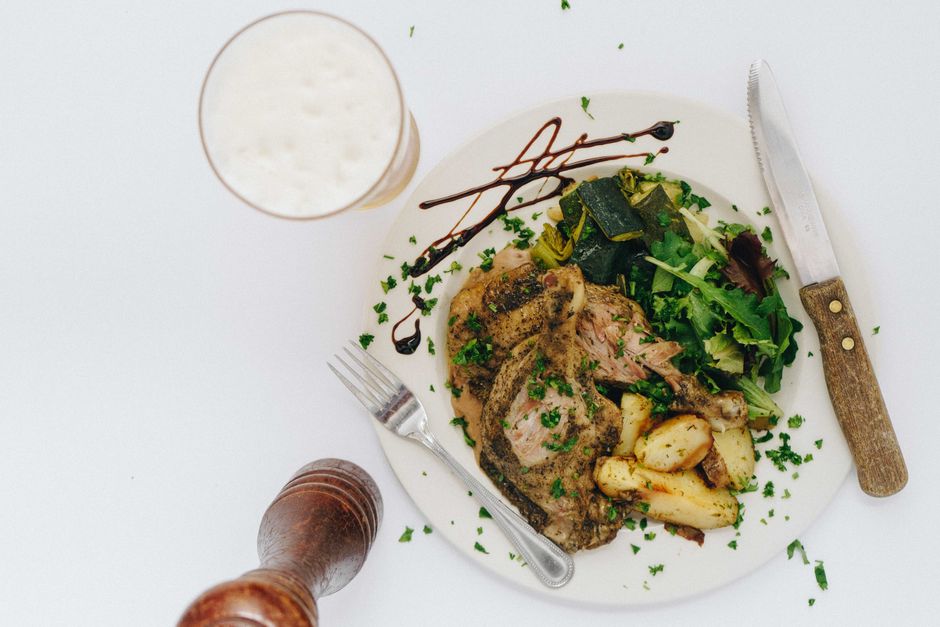
Roast Lamb Shoulder with Rosemary Potatoes is a generous meal built around two different kinds of heat: a gentle roast to soften the lamb, followed by a hotter oven to crisp the potatoes. Garlic, rosemary and lemon keep the flavours focused, while onions beneath the meat provide the beginning of a savoury pan gravy. You can bring everything to the table on a large platter, with the lamb pulled into thick pieces and the potatoes tucked around it.
The useful trick is to give each part the conditions it needs. Keep the shoulder covered for most of its cooking time, then let it rest while the potatoes finish roasting. You get tender meat and golden edges without trying to make both happen at the same temperature.
Ingredients and equipment
This recipe serves six, depending on the size of the shoulder and what you serve alongside it. Allow roughly four to five hours for cooking and resting, with some flexibility for a particularly thick joint. You will need a deep roasting tin, foil or a close-fitting lid, a saucepan and a separate shallow tray for the potatoes.
For the lamb
- 1 bone-in lamb shoulder, approximately 2–2.5 kg
- 2 large onions, peeled and thickly sliced
- 6 garlic cloves, peeled
- 4 rosemary sprigs
- 2 tablespoons olive oil
- Finely grated zest of 1 lemon
- 2 teaspoons fine sea salt
- 1 teaspoon freshly ground black pepper
- 300 ml low-salt lamb, chicken or vegetable stock, plus extra if needed
For the rosemary potatoes and gravy
- 1.5 kg floury potatoes, such as Maris Piper or King Edward
- 4 tablespoons olive oil, or a mixture of olive oil and reserved lamb fat
- 1 tablespoon finely chopped rosemary leaves
- Salt and freshly ground black pepper, to taste
- 1 tablespoon plain flour, optional, for thickening the gravy
- 150–250 ml additional low-salt stock, as needed
- Lemon juice, to taste
Prepare the shoulder for a slow roast
Heat the oven to 160°C conventional or 140°C fan. Spread the onions across the roasting tin. They form a simple bed that keeps the bottom of the shoulder away from direct contact with the metal and adds sweetness to the cooking juices.
Finely chop two garlic cloves and the leaves from two rosemary sprigs. Mix them with the olive oil, lemon zest, salt and pepper. Pat the lamb dry, then rub the mixture over its surface, working into any natural folds. There is no need to cut deep pockets into the joint; garlic pushed into exposed slits can darken before the surrounding meat is ready.
Set the shoulder on the onions, fat side uppermost. Add the remaining garlic cloves and rosemary sprigs around it, then pour the stock into the tin, avoiding the seasoned surface. Cover tightly with foil or a lid. A secure cover matters because trapped moisture helps prevent the juices from evaporating too quickly.
Cook until the meat yields easily
- Roast the covered shoulder for three hours before checking it. Open the foil carefully, keeping your hands away from escaping steam.
- Press a fork into a thick section and twist gently. If the meat feels firm and resists separating, cover it again and continue cooking in 30-minute intervals.
- Check the liquid when you check the meat. The tin should contain a shallow pool of juices. If it looks nearly dry, add a splash of hot stock around the edges.
- Once the shoulder is tender, remove the cover and roast for another 20–30 minutes to deepen the colour. Spoon a little of the pan juices over any lean areas that look dry.
Most shoulders of this size need about three and a half to four and a half hours overall, but use texture to judge the finish. The meat should separate readily with a fork, and the bone should feel loose. Shoulder is suited to this soft, pull-apart result; a pink, sliceable finish calls for a different approach and cut.
Transfer the lamb to a warm platter and cover loosely with foil. Rest it for 30–40 minutes while you finish the potatoes and gravy. Keep the roasting tin and all its contents.
Make rosemary potatoes with crisp edges
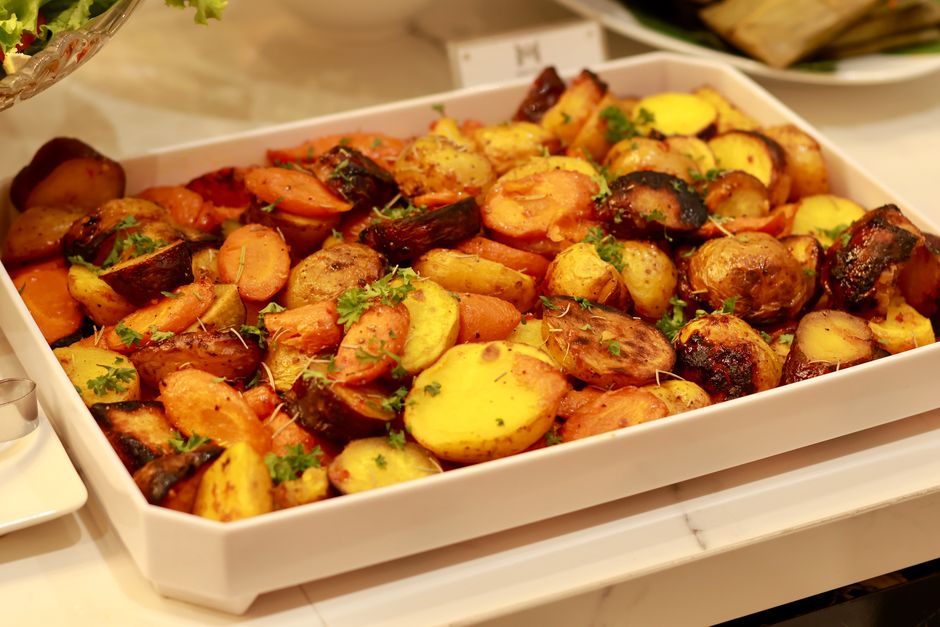
Start preparing the potatoes during the final part of the lamb’s cooking time. Peel them and cut into evenly sized chunks, approximately 5 cm across. Put them in a saucepan, cover with cold water and add a generous pinch of salt. Bring to a boil, then simmer for 8–10 minutes, until the outsides have softened but the centres still hold together.
Drain thoroughly and leave in the colander for five minutes so surface moisture can escape. Return them to the empty pan and shake gently to roughen their edges. Those uneven surfaces catch the oil and become the crispest parts.
- When the lamb comes out, increase the oven to 220°C conventional or 200°C fan. Put the oil or oil-and-lamb-fat mixture in the shallow tray and heat it in the oven for five minutes.
- Carefully add the drained potatoes to the hot tray. Turn them in the fat and spread them in one layer, leaving space between the pieces. Season lightly with salt and pepper.
- Roast for 20 minutes, then turn the potatoes with a spatula. Sprinkle over the chopped rosemary and roast for another 15–20 minutes, until golden and crisp.
Adding the chopped rosemary partway through keeps it fragrant without giving it the full roasting time to scorch. If your tray is crowded, use two trays and swap their positions when you turn the potatoes. A crowded tray traps steam and makes browning slower.
Turn the roasting juices into gravy
Pour the liquid from the lamb tin through a sieve into a jug, pressing gently on the onions and garlic. Leave it briefly so the fat rises, then spoon most of that fat from the surface. Reserve some for the potatoes if you like, keeping the darker juices beneath.
For a light gravy, pour the skimmed juices into a saucepan and simmer until the flavour tastes rounded. Add extra stock if they are too concentrated. For a thicker version, heat one tablespoon of reserved fat in the saucepan, stir in the flour and cook for one minute. Gradually whisk in the roasting juices, followed by enough extra stock to reach your preferred consistency.
Simmer the thickened gravy for several minutes, stirring until smooth. Taste before adding salt, since both the seasoning and stock contribute. A small squeeze of lemon can brighten a rich gravy without making it taste noticeably citrusy.
Serve the lamb while the potatoes are crisp
Use two forks to ease the shoulder into large pieces, removing the bone and any firm pockets of fat as you go. Spoon a little gravy over the meat and serve the rest separately. Arrange the potatoes around the lamb just before bringing the platter to the table so their crusts stay crisp.
Steamed greens, peas or simply dressed cabbage make useful accompaniments. Keep their seasoning light and fresh to balance the rich meat. If the lamb needs longer than expected, hold the drained, parboiled potatoes aside and roast them when the shoulder is ready to rest. The tender meat sets the schedule; the potatoes provide the final flourish.