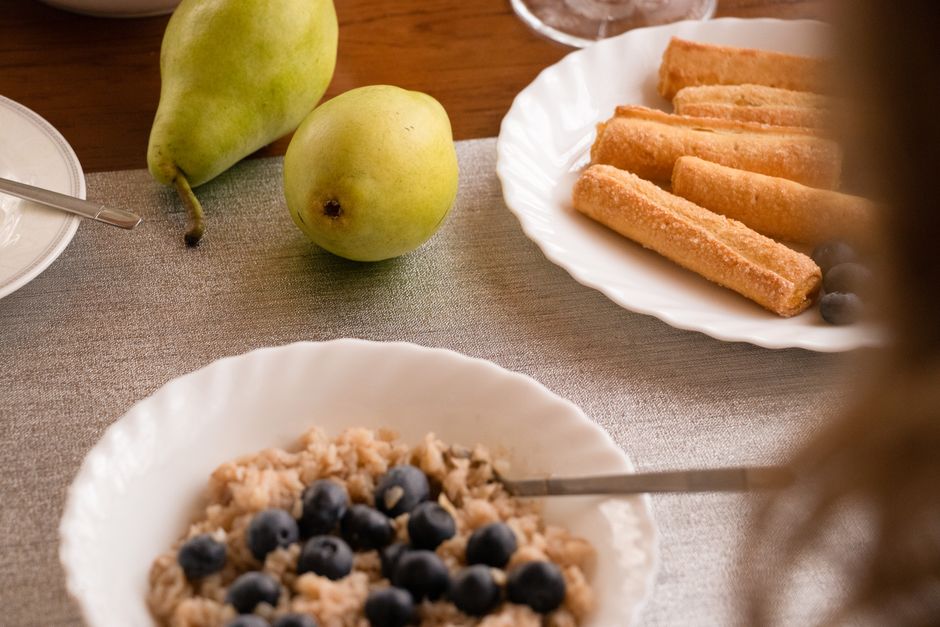
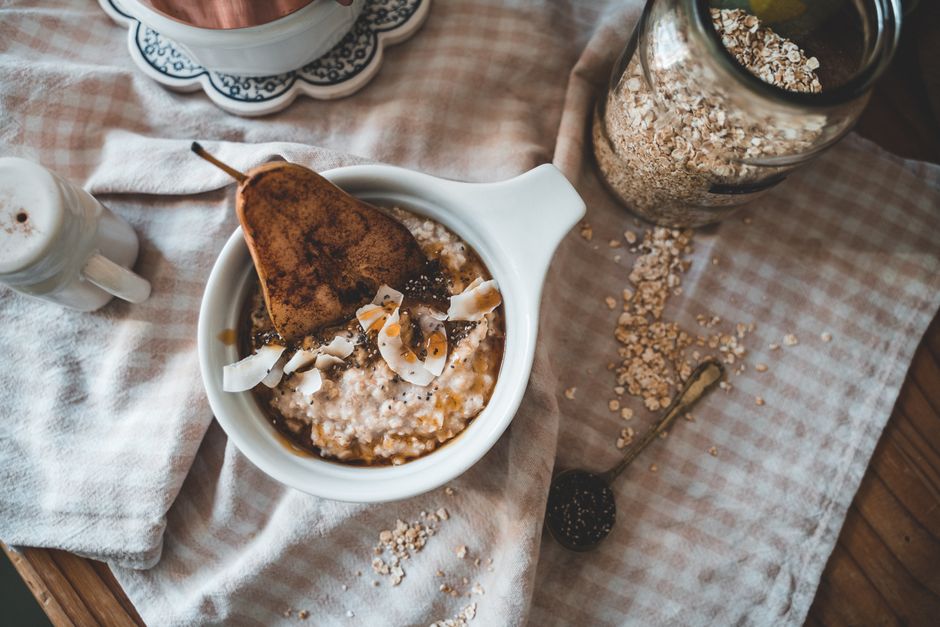
Baked porridge with pears and walnuts makes a warming breakfast with tender oats, soft fruit and a lightly golden top. You mix everything in a bowl, transfer it to a baking dish and let the oven handle the cooking. Pears bring gentle sweetness, while walnuts add texture to each spoonful. This recipe produces a moist, scoopable porridge that you can serve with warm milk or yogurt, making it equally suited to a relaxed breakfast and a morning when you want leftovers ready for tomorrow.
Baked Porridge with Pears and Walnuts
This recipe serves four generously. Allow about 15 minutes to prepare the ingredients, 35-40 minutes for baking and another 5-10 minutes for resting. Use a baking dish approximately 20 cm square, with enough depth to hold the liquid comfortably.
Ingredients
- 200 g rolled porridge oats
- 2 medium ripe but firm pears
- 60 g walnuts, roughly chopped
- 600 ml milk, dairy or unsweetened oat milk
- 1 large egg
- 3 tablespoons maple syrup
- 25 g unsalted butter, melted and cooled slightly, plus extra for greasing
- 1 teaspoon vanilla extract
- 1 teaspoon ground cinnamon
- 1 teaspoon baking powder
- 1/4 teaspoon fine salt
- Extra milk, plain yogurt and maple syrup, to serve as desired
You will also need a mixing bowl, a jug and a whisk. A fairly shallow baking dish gives you a generous golden surface. If your dish is deeper and narrower, the centre may need a little longer in the oven.
Choose fruit and oats for a tender centre
Ordinary rolled porridge oats work well because the flakes soften in the milk while retaining some texture. Avoid substituting steel-cut oats, which require different cooking times and liquid quantities. Very fine instant oats absorb liquid differently and can produce a much thicker, more uniform mixture.
Choose pears that yield slightly near the stem but still hold their shape when sliced. Conference, Bosc and Anjou pears are all suitable. Very hard pears can remain firm after the oats have cooked, while extremely soft fruit can collapse into the mixture. If your pears are firm, chop them into smaller pieces so they soften more easily.
You can peel the pears or leave the skins on. Leaving them unpeeled saves preparation time and adds a little texture. Chop one pear to distribute through the oats, then slice the second for the top. This gives you fruit throughout the dish as well as a simple decorative finish.
How to make the baked porridge
- Prepare the oven and dish. Heat the oven to 180 degrees Celsius conventional or 160 degrees Celsius fan. Place a rack in the middle of the oven. Lightly butter the base and sides of your baking dish.
- Cut the pears. Core both pears, removing the seeds and tough central fibres. Cut one pear into roughly 1 cm chunks. Cut the other into thin slices and set those aside for the surface.
- Combine the dry ingredients. Put the oats, cinnamon, baking powder and salt into a large bowl. Stir thoroughly, then mix in the chopped pear and about two-thirds of the walnuts.
- Mix the liquids. Whisk the milk, egg, maple syrup and vanilla together in a jug until the egg is fully blended. Whisk in the cooled melted butter. Small flecks of butter may form if the milk is cold, but they will melt during baking.
- Assemble the porridge. Pour the milk mixture over the oats and stir well. Transfer to the prepared dish, spreading the chopped pears evenly. Arrange the pear slices loosely across the surface and scatter over the remaining walnuts. Press exposed nuts gently into the wet oats.
- Bake until set. Bake for 35-40 minutes, until the edges are lightly golden and the centre has lost its liquid wobble. Push a spoon into the middle to check that the oats are swollen and moist without a pool of loose milk. If necessary, bake for another five minutes and check again.
- Rest before serving. Let the dish stand for 5-10 minutes. The oats will absorb a little more moisture as they settle. Spoon into bowls and add warm milk, yogurt or an extra drizzle of maple syrup to taste.
Look at the walnuts towards the end of baking. If they are darkening before the centre is cooked, loosely cover the dish with foil for the remaining time. The middle should stay moist, so avoid waiting until the whole surface looks dry before taking it out.
Get the texture and sweetness you enjoy
Baked porridge firms up as it stands. For a softer bowl, add warm milk to your portion and gently fold it through. For more defined scoops, leave the dish to rest a little longer before serving. Either way, the oats should feel tender throughout.
Taste a piece of pear before you start. If the fruit is particularly sweet, reduce the maple syrup to two tablespoons and offer more at the table. Keep the milk quantity the same so the oats have enough liquid to cook properly.
Simple flavour adjustments
- Add gentle spice. A small pinch of ground ginger works alongside the cinnamon. Use a light hand so the pear flavour remains clear.
- Include citrus zest. A little finely grated orange zest adds fragrance. Wash the orange first and grate only the coloured surface, avoiding the bitter white pith.
- Make it dairy-free. Choose unsweetened oat milk and replace the butter with two tablespoons of neutral oil. Serve with a dairy-free yogurt if you like.
Plain yogurt gives a cool, tangy contrast to the warm oats. If you prefer a simpler breakfast, serve with milk alone. Add any extra syrup after tasting, since the cooked pears contribute sweetness of their own.
Prepare ahead and reheat leftovers
For an easier morning, measure the dry ingredients into a bowl the night before. Mix the milk, egg, syrup and vanilla in a separate covered jug and refrigerate it. In the morning, prepare the pears, melt the butter and combine everything while the oven heats. Keeping the oats separate until baking helps preserve the intended texture.
Refrigerate leftover porridge in a covered container within two hours and use within three days. Reheat individual portions with a splash of milk in the microwave, loosely covered, using short bursts and stirring where possible until steaming hot throughout. Add yogurt after heating.
You can freeze cooled portions in suitable containers for up to two months. Thaw overnight in the refrigerator before reheating. Stored oats absorb more moisture, so add milk gradually to bring back the soft consistency. Finish with a few freshly chopped walnuts and enjoy while warm.