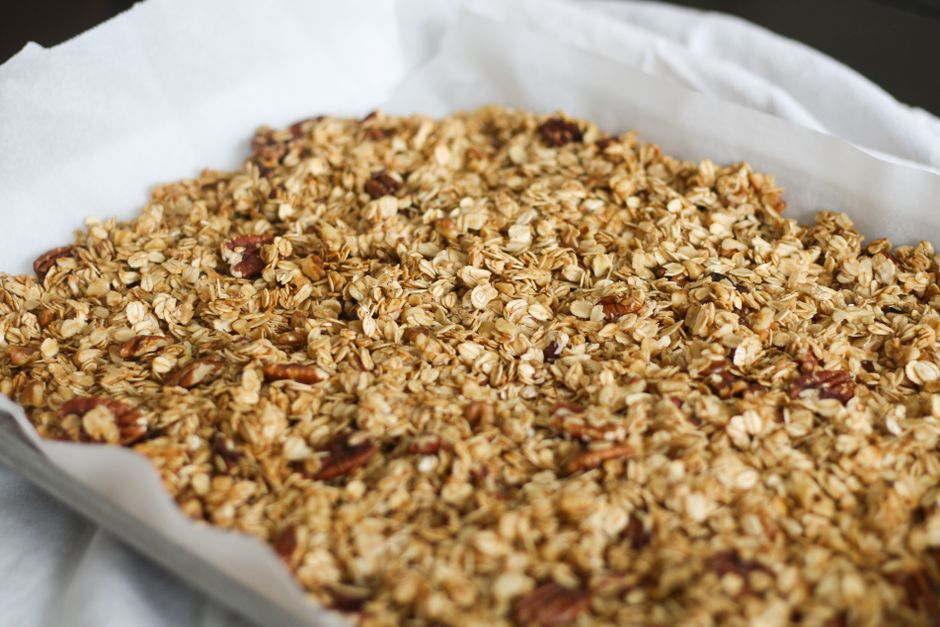
Baked apples with oats and cinnamon turn everyday ingredients into a warm, spoonable dessert. Each whole apple holds a buttery oat filling while a little water in the baking dish helps the fruit soften. You get tender apple, a gently toasted top, and fragrant juices to spoon over everything at the table. There is no pastry to roll and no separate sauce to prepare.
This recipe makes four individual portions. The most useful preparation step is removing the cores without cutting through the bottoms, giving the filling somewhere to sit. After that, let the texture guide you: a cooked apple should yield easily to a small knife while still holding its shape.
Choose apples that hold their shape
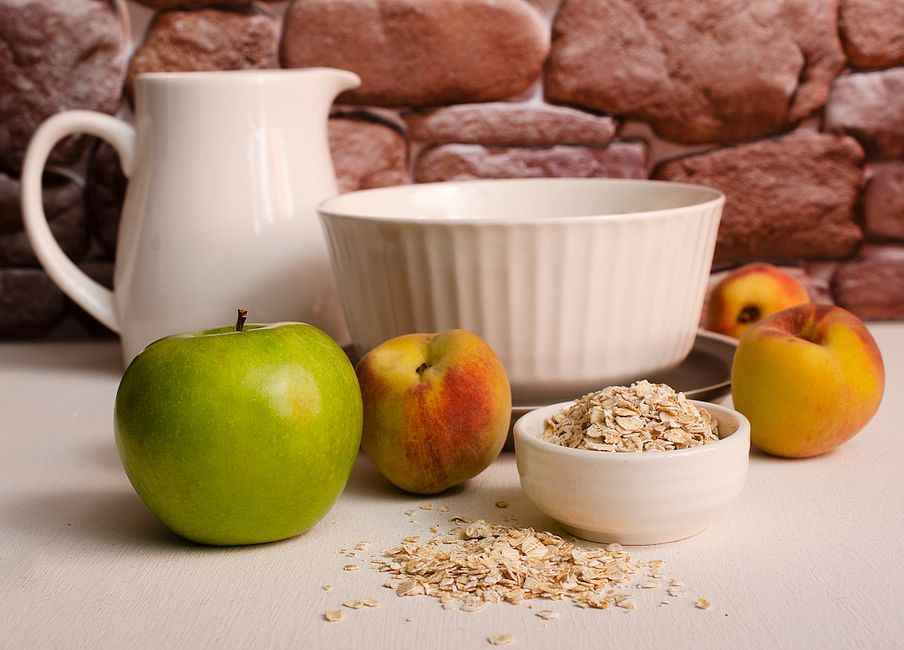
Braeburn, Pink Lady, and firm Jonagold apples are useful choices for stuffing and baking. Granny Smith gives you a sharper flavour against the sweet oats. Choose four medium-large apples that stand upright and feel firm, with no bruised patches. Similar sizes help the portions cook at roughly the same pace.
Leave the skins on to support the fruit as it softens. Apples that readily collapse into a puree are less useful here, because you want to lift each stuffed apple onto a plate. Very large fruit can take longer to soften, so check the flesh before assuming a browned topping means the dessert is ready.
Ingredients for four servings
- 4 medium-large firm apples
- 1 teaspoon lemon juice
- 1/2 cup old-fashioned rolled oats
- 2 tablespoons packed light brown sugar
- 1 teaspoon ground cinnamon
- A small pinch of fine salt
- 3 tablespoons unsalted butter, softened
- 1/2 teaspoon vanilla extract
- 2 tablespoons chopped walnuts or pecans, optional
- 1/2 cup water, plus extra if needed
- Plain yogurt, cream, or vanilla ice cream, for serving
Old-fashioned rolled oats give the filling some texture. Quick oats make a softer centre, while steel-cut oats need a different cooking method and are unsuitable here. Softened butter mixes evenly through the oats and helps form small clumps that sit neatly inside the fruit.
Choose a baking dish that holds the apples with a little space between them. A very wide dish lets the shallow water evaporate quickly. You will also need a paring knife, a small spoon or melon baller, a mixing bowl, and foil to cover the dish during the first part of baking.
Prepare the apples and filling
- Heat the oven. Set it to 375 degrees F (190 degrees C), or 350 degrees F (180 degrees C) for a fan oven. Position a rack in the middle so the oat tops have space above them.
- Steady the fruit. Wash and dry the apples. If one rocks on its base, shave off a very thin slice underneath without exposing the core. Place the apples in the dish to check that they stand securely.
- Remove the cores. Cut around each stalk and use a small spoon or melon baller to scoop out the seeds and tough core. Make an opening about 1 inch wide, leaving at least 1/2 inch of apple at the bottom. Work gradually to avoid piercing the base.
- Mix the filling. Combine the oats, brown sugar, cinnamon, and salt. Add the softened butter and vanilla, then rub or stir until the oats are coated and loose clumps form. Fold in the chopped nuts if using.
- Fill the cavities. Brush the exposed apple flesh with lemon juice. Divide the filling between the apples, settling it gently with a spoon. Mound any remaining mixture over the openings without packing it down hard.
- Add water and cover. Pour the water into the dish around the fruit, avoiding the topping. Cover loosely with foil, leaving room above the filling.
If you accidentally make a hole through an apple, it can still be baked. Some butter and juices will escape into the dish, so spoon those over the fruit when serving. Keeping the other apples intact helps their centres stay moist.
Bake until tender, then rest
Bake covered for 25 minutes. Carefully lift off the foil, directing the steam away from your hands, and continue baking uncovered for about 20 to 30 minutes. Start checking sooner for smaller apples. The uncovered stage lets the exposed oats become lightly golden while the fruit finishes softening.
Slide a small knife into the flesh near the upper side, away from the filling. It should enter with little resistance. The apple should look softened but still stand upright, with some bubbling juices around its base. If the centre feels firm, continue cooking and check again after a few minutes.
If the oats brown before the fruit is tender, loosely replace the foil. Check the liquid too: if the dish looks dry, add a few tablespoons of hot water around the apples. A little liquid keeps the juices from scorching against the dish.
Let the apples rest for 10 minutes before lifting them with a broad spoon. Their centres retain heat, and a brief rest makes them easier to handle. Spoon the cooking juices over each serving, sharing any buttery oat crumbs left in the dish.
Simple changes to the filling
Add a little dried fruit
A tablespoon of raisins or finely chopped dried cranberries adds chewy pieces to the centre. Mix them through the oats before filling the apples. With sweet apples and dried fruit together, you may prefer to reduce the brown sugar slightly. Keep additions modest so the filling still fits comfortably.
Adapt the butter and nuts
Leave out the optional nuts for a simpler oat filling. For a dairy-free version, use the same amount of a firm plant-based butter suitable for baking and choose a dairy-free accompaniment. Softer spreads with a high water content can produce a wetter filling.
Vary the spice gently
Cinnamon can carry the recipe on its own, but a small pinch of ground ginger or nutmeg adds another warm note. Finely grated orange zest also works well. Choose one addition at a time so the apple flavour remains clear.
Serving and saving leftovers
Serve in shallow bowls with plain yogurt for tang, cream for richness, or vanilla ice cream that melts into the warm juices. Break into the apple with your spoon and draw some oat filling into each bite. The soft fruit needs no elaborate finishing touches.
Refrigerate leftovers in a covered container within two hours and use within three to four days. Reheat in a small covered baking dish at 350 degrees F (180 degrees C) until hot throughout, adding a splash of water if needed. Uncover briefly at the end to refresh the topping. Reheated apples will be softer, so lift them gently and include their juices when serving.