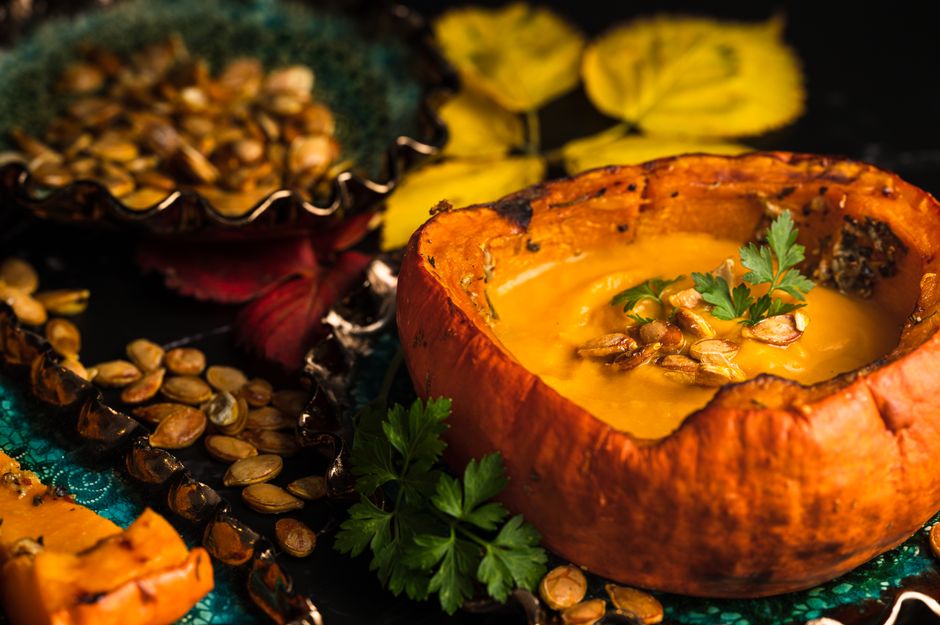
The common mistake is assuming creamy pumpkin soup needs roasted pumpkin. It does not. The real problem usually comes from thin stock, flat seasoning, or pumpkin that never gets enough time in the pot to develop flavor. You can make a rich, smooth bowl in 30 minutes if you treat the soup as a layering job: soften the aromatics, toast the spices, cook the pumpkin with concentrated stock, then add richness at the end.
This method makes four generous bowls. It uses canned pumpkin for speed, but the texture and flavor still feel deliberate rather than rushed. Toasted seeds add the crunch that smooth soup needs.
Why fast pumpkin soup often tastes flat
A fast soup fails when every ingredient enters the pot at once. Pumpkin has a mild, earthy flavor, so it needs contrast. Onion brings sweetness, garlic adds sharpness, stock supplies salt and body, and spices create warmth. Skip two or three of those layers and the finished soup tastes like orange purée.
The first flavor problem is weak browning
Start with a wide saucepan and medium heat. Add olive oil or butter, then cook one finely diced yellow onion with a pinch of salt for six to eight minutes. The onion should turn soft and lightly golden at the edges. Do not rush this step. It creates sweetness without adding sugar.
Add two minced garlic cloves only during the final minute. Garlic burns quickly, and burnt garlic gives the soup a bitter edge that extra cream cannot hide.
The second problem is unbalanced liquid
Use 3 cups of low-sodium vegetable stock for every 15-ounce can of pumpkin. That ratio produces a soup that pours easily but still coats a spoon. If you use regular salted stock, start with less added salt and adjust after blending.
Season in stages. Add 1 teaspoon ground cumin, 1/2 teaspoon smoked paprika, 1/4 teaspoon ground cinnamon, and a small pinch of cayenne with the pumpkin. The cinnamon should sit in the background. Too much makes the soup taste like dessert.
Why acidity matters
Finish with 1 tablespoon of apple cider vinegar or fresh lemon juice. Acid does not make the soup sour when you use a small amount. It sharpens the pumpkin and cuts through butter, coconut milk, or cream. This final adjustment often fixes a bowl that tastes dull even after you add more salt.
Canned or fresh pumpkin: the best base for 30 minutes
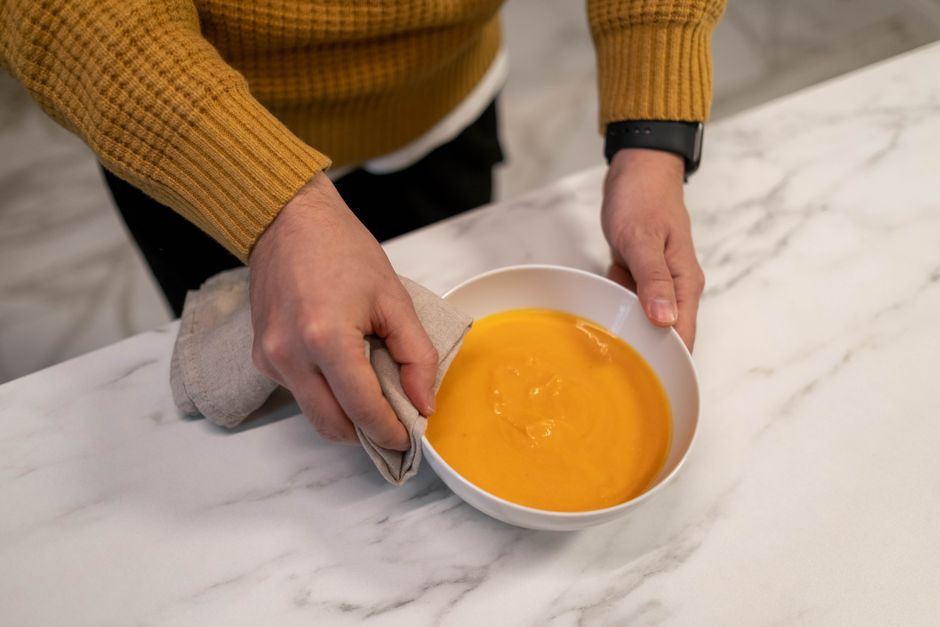
For a strict 30-minute deadline, canned pumpkin wins. Fresh pumpkin can taste excellent, but peeling, cutting, and cooking it adds work and creates inconsistent texture. The best fast soup uses canned pumpkin, then builds a roasted impression with browned onion, toasted spices, and a short simmer.
| Pumpkin base | Time needed | Texture | Best use |
|---|---|---|---|
| Libby’s 100% Pure Pumpkin, 15 oz | Immediate | Very smooth | Reliable weeknight soup |
| Fresh sugar pumpkin, about 2 lb | 45 to 60 minutes | Thicker and more rustic | Weekend cooking |
| Frozen pumpkin purée, 16 oz | 25 to 35 minutes | Soft and slightly loose | Freezer-friendly cooking |
| Butternut squash purée | Immediate if prepared | Dense and sweet | A less earthy alternative |
What to check on the can
Choose a can labeled 100% pumpkin, not pumpkin pie filling. Pie filling already contains sugar and spices, which can push the soup toward a sweet custard flavor. Drainage should not matter much, but very watery pumpkin may need an extra five minutes of simmering.
When fresh pumpkin is worth the effort
Fresh pumpkin makes sense when you want roasted flavor from the pumpkin itself, not just from the aromatics. Cut the pumpkin into 1-inch pieces, toss it with oil, and roast at 425°F until tender and browned. That process takes longer than the soup, so it does not belong in a true 30-minute version.
For the quick recipe, use canned pumpkin and spend the saved time on seasoning. That choice produces the most consistent result.
The exact 30-minute cooking schedule
The clock works best when you prepare the ingredients before heating the pan. The soup has only a few steps, but several happen quickly. Measure the spices, open the stock, and set the pumpkin beside the stove before you begin.
- Minute 0 to 5: Dice one medium yellow onion, mince two garlic cloves, and measure the spices. Heat 2 tablespoons of olive oil or butter in a 4-quart saucepan over medium heat.
- Minute 5 to 12: Cook the onion with 1/2 teaspoon salt. Stir every minute until it turns soft and lightly golden.
- Minute 12 to 14: Add garlic, cumin, smoked paprika, cinnamon, and cayenne. Stir for 30 to 60 seconds, just until the spices smell warm.
- Minute 14 to 20: Stir in one 15-ounce can of pumpkin and 3 cups of vegetable stock. Scrape the bottom of the pan, raise the heat, and bring the soup to a gentle boil.
- Minute 20 to 25: Lower the heat and simmer uncovered. This short reduction concentrates the stock and softens any raw canned flavor.
- Minute 25 to 27: Blend until completely smooth. Add 1/2 cup heavy cream, whole milk, or unsweetened coconut milk.
- Minute 27 to 30: Add lemon juice or apple cider vinegar. Taste for salt, then ladle the soup into bowls and finish with toasted seeds.
Keep the simmer gentle. A hard boil can make dairy split and can reduce the liquid too quickly. If the soup becomes thicker than you want, add stock in 2-tablespoon increments until it pours cleanly from the ladle.
How to make pumpkin soup creamy without making it heavy

Creaminess comes from smooth blending and controlled fat, not from pouring in a large amount of cream. A good pumpkin soup should feel silky but still taste like pumpkin and stock.
Can milk replace heavy cream?
Yes. Use 1/2 cup whole milk for a lighter soup, or use 1/2 cup heavy cream for a rounder, richer finish. Add dairy after the main simmer and keep the heat low. Boiling the soup after adding milk can create a grainy texture.
Can coconut milk work?
Unsweetened full-fat coconut milk works well when you want a dairy-free bowl. Use 1/2 cup and add a little extra lime juice or apple cider vinegar at the end. Coconut milk brings its own flavor, so reduce the cinnamon and skip smoked paprika if you want a cleaner pumpkin profile.
What if the soup is too thin?
Simmer it uncovered for five more minutes before adding cream. Reducing the liquid improves flavor and texture at the same time. You can also stir 1 tablespoon of tahini into the blended soup for body, but do not add raw flour directly to the pot. Flour creates lumps and dulls the flavor.
For the smoothest result, blend in batches only if your blender requires it, and never fill a countertop blender above the manufacturer’s hot-liquid mark. An immersion blender keeps the process simple and reduces transfer risks.
The mistakes that ruin the texture and flavor

Do not fix bland pumpkin soup by adding more cream. Cream softens flavor; it does not create it. Correct the salt, acid, and spice balance first.
- Using pumpkin pie filling: The added sugar and spice blend can make a savory soup taste like dessert. Use plain pumpkin purée.
- Skipping the onion cook: Raw onion leaves a sharp bite. Give it at least six minutes over medium heat.
- Adding all the stock at once without tasting: Stock brands vary in salt. Start with less salt and adjust after blending.
- Boiling after adding dairy: High heat can split cream or milk. Keep the soup below a strong boil.
- Overloading the cinnamon: Use 1/4 teaspoon for a four-bowl batch. Pumpkin already has natural sweetness.
- Leaving the seeds raw: Smooth soup needs contrast. Toast pepitas in a dry skillet until they puff slightly and smell nutty.
- Blending without checking thickness: A very thick soup can cool quickly and feel pasty. Add warm stock a few tablespoons at a time.
If the soup tastes sweet, add acid and a pinch of salt. If it tastes bitter, check for burned garlic or spices. If it tastes watery, reduce it uncovered rather than adding more pumpkin without seasoning.
The finished bowl and the best substitutions
Serve each bowl with toasted pumpkin seeds, a small swirl of cream or olive oil, black pepper, and a few drops of lemon juice. The seeds should go on at the last moment so they stay crisp. A slice of sourdough turns the soup into a complete light meal.
What to use when you do not want dairy
Unsweetened coconut milk gives the richest dairy-free result, but oat milk creates a milder flavor and thinner body. Tahini adds a savory, nutty finish and works well with cumin. Do not use sweetened plant milk; even a small amount of sugar can make the soup taste like pie filling.
What to serve instead of pumpkin
Butternut squash gives a sweeter, denser soup. Carrot and sweet potato create a brighter orange color but need more acid. Acorn squash gives a deeper, nuttier taste. The same method works, but adjust the liquid because each vegetable holds a different amount of water.
For the strongest 30-minute result, choose canned pumpkin, cook the onion until lightly golden, toast the spices, blend before adding the finishing dairy, and use acid at the end. That sequence gives you a smooth, savory bowl with enough contrast to keep every spoonful interesting.


